
 By Admin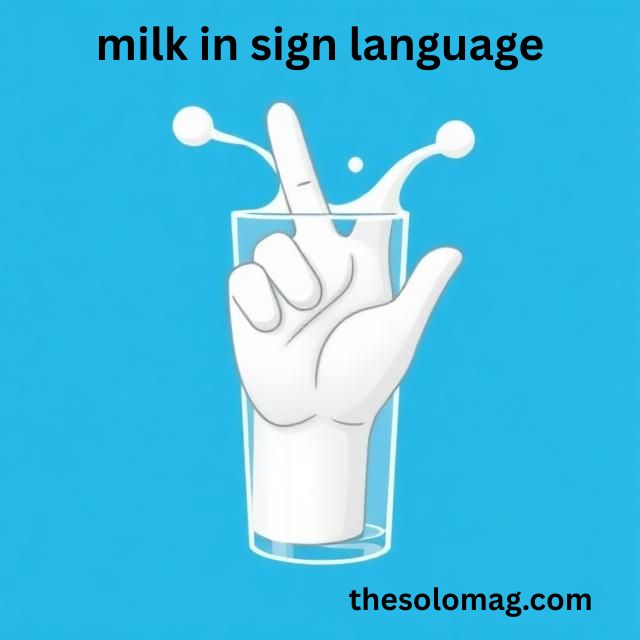

Introduction
Learning how to sign “milk” is one of the first words many people learn in sign language. It is simple, practical, and commonly used in everyday conversations, especially with young children. Whether you’re learning sign language for communication, education, or family use, mastering this sign is a great place to start.
Note: Sign languages are not universal. The instructions below describe the sign in American Sign Language (ASL). Other sign languages, such as British Sign Language (BSL), may use a different sign.
Table of Contents
- What Does the Milk Sign Mean?
- How to Sign “Milk” in ASL
- Tips for Beginners
- Common Mistakes
- Why Learn Basic Signs?
- Conclusion
- FAQs
What Does the Milk Sign Mean?
The ASL sign for “milk” represents the motion of milking a cow. It’s an iconic sign, meaning the movement visually relates to the concept it represents.
How to Sign “Milk” in ASL
Follow these simple steps:
- Make a loose fist with one hand.
- Open your fingers.
- Close them back into a fist.
- Repeat the opening and closing motion two or three times.
The movement resembles squeezing a cow’s udder to milk it.

- Keep your hand relaxed.
- Repeat the squeezing motion naturally.
- Watch native ASL signers to improve your accuracy.
- Practice in front of a mirror to check your handshape and movement.
Common Mistakes
- Making the fist too tight.
- Moving the entire arm instead of just the fingers.
- Performing the motion too quickly.
- Confusing the sign with other hand-opening movements.
Why Learn Basic Signs?
Learning everyday signs like milk, eat, drink, more, and please helps build confidence and supports communication with Deaf and hard-of-hearing individuals. These basic signs are also widely used with infants and toddlers as part of early communication.
Conclusion
The ASL sign for “milk” is easy to learn and useful in daily life. With regular practice and guidance from reliable learning resources, you’ll be able to use it confidently in conversations.
10 Short FAQs
1. How do you sign “milk” in ASL?
Open and close a loose fist repeatedly, like milking a cow.
2. Is the milk sign easy to learn?
Yes, it’s one of the easiest beginner signs.
3. Which hand should I use?
You can use your dominant hand.
4. Is this sign the same worldwide?
No. Different sign languages use different signs.
5. Can children learn this sign?
Yes, it’s commonly taught to young children.
6. Is ASL the same as English?
No. ASL has its own grammar and structure.
7. How long does it take to learn this sign?
Most people can learn it in a few minutes.
8. Can I use both hands?
The standard ASL sign is usually made with one hand.
9. Why is the motion a squeezing action?
It visually represents the traditional act of milking a cow.
10. Where can I practice ASL signs?
Use trusted ASL dictionaries, educational websites, and videos from experienced signers.
FOR FURTHER INFOMATION ,VISIT THESLOMAG.COM
Sources
- National Institute on Deafness and Other Communication Disorders (NIDCD): https://www.nidcd.nih.gov/
- ASL University (Lifeprint): https://www.lifeprint.com/
- Handspeak ASL Dictionary: https://www.handspeak.com/
- Signing Savvy: https://www.signingsavvy.com/
- American Society for Deaf Children: https://deafchildren.org/