
 By Admin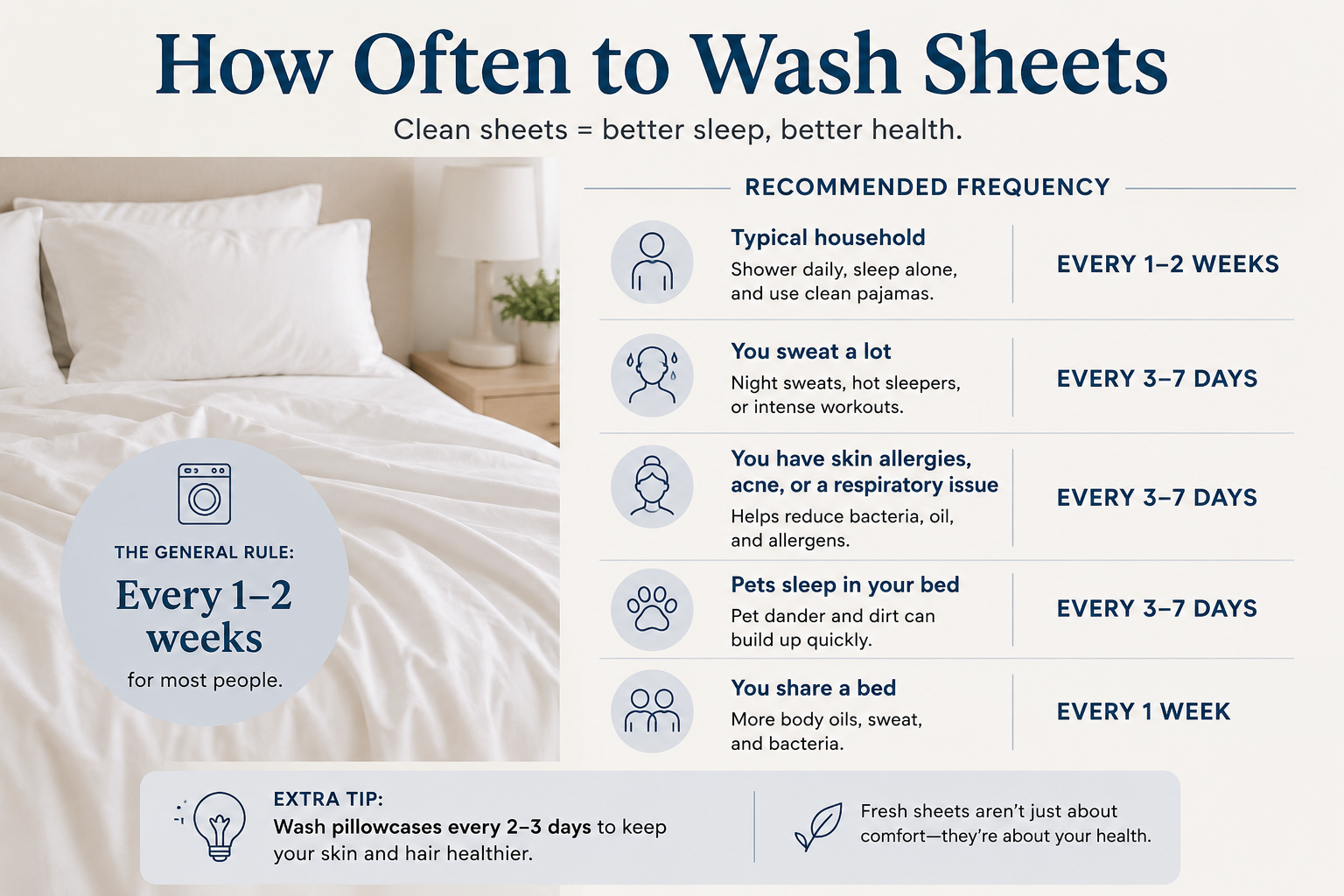
Do you know what’s lurking in your bed right now? While you sleep, your sheets silently collect a microscopic ecosystem of dead skin, bacteria, and dust mites. The question “how often to wash sheets” isn’t just about keeping your bedroom smelling fresh—it’s a genuine health consideration that affects your skin, breathing, and sleep quality.
Most experts agree on a clear answer: wash your sheets once a week. But the real answer depends on who you share your bed with, how you sleep, and even the season. This comprehensive guide covers everything you need to know about how often to wash bed sheets, why it matters, and exactly how to do it right.
Quick Answer: How Often Are You Supposed to Wash Your Sheets?
The short answer: Wash your bed sheets at least once every week .
The longer answer: While weekly washing is the gold standard recommended by dermatologists and cleaning experts, some people can stretch this to every two weeks, while others need to wash more frequently. According to the Cleveland Clinic, you should wash your sheets at least once every week to remove accumulated sweat and dead skin cells .
If you’re wondering how often are you supposed to wash your bed sheets specifically for your situation, consider these factors:
| Your Situation | Recommended Frequency |
|---|---|
| Standard recommendation | Weekly |
| You sleep alone, shower at night, no pets | Every 2 weeks |
| You have allergies or asthma | Weekly or more |
| Pets sleep in your bed | Twice weekly |
| You sweat heavily or have night sweats | Every few days |
| You’re recovering from illness | Immediately after, then weekly |
| You sleep naked | Twice weekly |
| Hot summer months | Weekly to twice weekly |
Why Washing Your Sheets Matters: The Science Behind Dirty Bedding
Understanding why you need to wash sheets regularly makes it much harder to skip laundry day. The truth is, your bed is a biological hotspot.
You Shed Millions of Skin Cells Every Night
The average person sheds about 500 million skin cells per day, and around 160 million of these end up in your bed due to friction against your sheets . That’s roughly half a teaspoon of dead skin every single day .
Dermatologist Sean McGregor, DO, of the Cleveland Clinic explains: “Any kind of friction will chafe off the outer layer of your skin cells, so a lot of it is shed when you’re making contact with your sheets in your bed at night” .
Dust Mites: The Invisible Bedfellows
Those dead skin cells don’t just sit there—they attract dust mites. These microscopic creatures feed on human skin flakes, and your bed is their all-you-can-eat buffet. Dust mite droppings are a common trigger for allergies and asthma . According to the American Lung Association, ongoing exposure to dust mites can trigger allergies and asthma attacks in sensitive groups .
Bacteria and Fungi on Your Sheets
Research from the University of Westminster reveals that unwashed sheets can harbor concerning microorganisms including :
-
Staphylococcus aureus: Can cause skin infections, pneumonia, and worsen acne
-
Candida albicans: A fungus that can cause yeast infections
-
E. coli: Bacteria that can cause stomach upset
Health.com reports that bacteria like Staphylococcus aureus thrive in the warm, moist environment of dirty sheets, potentially leading to skin infections like folliculitis, impetigo, and cellulitis .
What Happens If You Don’t Wash Your Sheets?
The health impacts of skipping sheet washes are real:
-
Skin problems: Clogged pores, acne breakouts, rashes, and worsening of conditions like eczema or psoriasis
-
Allergy flare-ups: Sneezing, coughing, and asthma attacks from dust mite exposure
-
Infections: Bacterial and fungal infections, particularly if you have pre-existing skin conditions or open wounds
-
Unpleasant odors: The accumulation of sweat, body oils, and bacteria creates noticeable smells that won’t wash out easily if left too long
-
Smelly, stained sheets: Yellowing and permanent discoloration from body oils
Step-by-Step Guide: How to Wash Your Bed Sheets Properly
Knowing how often to wash your bed sheets is only half the battle. Washing them correctly ensures you actually remove the grime, allergens, and bacteria.
1. Strip the Bed Correctly
Remove all bedding—fitted sheet, flat sheet, pillowcases, duvet cover, and mattress protector. Shake each item outside if possible to dislodge dust and pet hair.
2. Check the Care Label
Different fabrics have different needs. Always check the manufacturer’s care label before washing .
3. Choose the Right Water Temperature
Hot water is best for killing dust mites and bacteria . The Cleveland Clinic recommends using hot water when washing your sheets—the heat kills off dust mites and helps get everything thoroughly clean .
However, some fabrics require gentler treatment:
-
Cotton: Hot water is fine
-
Linen: Warm water recommended
-
Silk/Satin: Cold water on delicate cycle
-
Flannel: Warm water (hot water may shrink)
-
Bamboo: Cold or warm water
Experts from Good Housekeeping note that washing at 60 degrees is better at killing germs and should be used if someone in the house has been ill .
4. Select the Right Detergent
Use a quality laundry detergent. People with sensitive skin or eczema should choose fragrance-free and dye-free detergents .
5. Load the Washer Properly
Don’t overload the machine—sheets need room to move around for thorough cleaning .
6. Dry Thoroughly
Drying is just as important as washing—moisture left in sheets can lead to mildew. According to Swash, you should dry your sheets thoroughly to kill dust mites and prevent mold and mildew .
-
Tumble dry on low to medium heat (high heat can shrink or damage fabrics)
-
Remove promptly to prevent wrinkles
-
Line drying in direct sunlight is excellent—UV rays naturally disinfect and the breeze helps kill odors
7. Make the Bed with Fresh Sheets
Put your clean, dry sheets back on the bed and enjoy that fresh, crisp feeling.
Best Practices for Washing Bed Sheets
Airtight Your Schedule
Create a consistent routine for washing sheets—many experts recommend “Fresh Sheet Fridays” or choosing one specific day each week for this chore .
Rotate Multiple Sheet Sets
One of the best ways to make weekly washing easier is to own 2-3 sets of sheets. This way, you can strip the bed and put on fresh sheets immediately, then wash the dirty set when convenient .
Wash Pillowcases More Often
Your face spends 7-8 hours pressed against your pillowcase every night. Pillowcases accumulate facial oils, hair products, sweat, and even saliva .
If you have acne-prone or sensitive skin, consider changing your pillowcase twice a week . Good Housekeeping experts suggest washing pillowcases even more frequently than sheets because they collect so much facial oil and product residue .
Let Your Bed Air Out
Don’t make your bed immediately after waking. Dr. McGregor recommends giving sweaty sheets a chance to dry: “This will reduce the moisture that dust mites and bacteria need to flourish” .
Pre-Treat Stains
Treat any visible stains (blood, sweat marks, food spills) before washing for best results .
Wash New Sheets Before First Use
New sheets may contain dyes, chemicals, or dirt from manufacturing and shipping. The American Academy of Dermatology recommends washing bedding before first use, especially for people with sensitive skin .
How Often to Wash Different Types of Bedding
Not everything on your bed needs the same wash schedule. Here’s a complete breakdown:
| Item | Wash Frequency | Notes |
|---|---|---|
| Fitted & Flat Sheets | Weekly (or every 2 weeks) | This is the core question—“how often to wash bed sheets” |
| Pillowcases | Weekly to twice weekly | Especially important for acne-prone or sensitive skin |
| Duvet Covers | Every 1-2 months | Less frequent if you use a top sheet |
| Blankets/Throws | Every 2-3 months | |
| Comforters | Every 1-2 times per year | Or when visibly soiled |
| Mattress Protectors/Pads | Monthly | |
| Pillows | Every 4-6 months (if washable) | Replace every 1-2 years |
| Bed Skirts | Every 3-6 months | They collect dust but don’t touch your skin |
| Mattress | Vacuum every 6 months | Spot clean stains; replace every 7-10 years |
Common Mistakes to Avoid
1. Overloading the Washing Machine
Cramming too many sheets into the washer prevents proper agitation and rinsing, leaving dirt and detergent residue behind.
2. Using Too Much Detergent
More detergent isn’t better—it can leave residue that makes sheets feel stiff and scratchy.
3. Using Too High Heat for Delicate Fabrics
Silk, satin, and bamboo can be damaged by high heat. Always check care labels .
4. Leaving Sheets in the Washer Too Long
Damp sheets left in the washer can develop mildew and a musty smell that requires rewashing.
5. Not Washing Before First Use
New sheets should always be washed before sleeping on them to remove manufacturing chemicals and dyes .
6. Skipping the Mattress Protector
A good mattress protector protects your expensive mattress and only needs washing monthly .
7. Washing in Cold Water When You Need Hot
Unless care labels specifically prohibit it, wash sheets in hot water to kill dust mites and bacteria .
Expert Tips from Dermatologists and Cleaning Experts
Cleveland Clinic:
-
Wash sheets at least once weekly
-
Use hot water to kill dust mites and bacteria
-
Don’t make your bed immediately—let it air out first
American Academy of Dermatology:
-
People with sensitive skin and eczema should use 100% cotton sheets
-
Wash bedding in hot water with fragrance-free, dye-free detergent
-
Wash new bedding before first use
From Good Housekeeping Lab Experts:
-
Most people notice odors after about 14 days without washing
-
Night showerers may be able to go slightly longer between washes
-
Even night showerers should aim for roughly weekly laundering
Medical Microbiologists:
-
Manal Mohammed of the University of Westminster emphasizes that skin cells attract dust mites, and their droppings can trigger allergies and even asthma
Real-World Examples and Expert Recommendations
What the Experts Say
Cleveland Clinic – “Medical experts advise washing your sheets at least once a week”
Good Housekeeping – “Washing bed sheets once per week is the standard recommendation for most people”
Health.com – “Because bedding gets dirty so quickly, it’s a good idea to wash your bed sheets every week. At most, you should wash your sheets every two weeks”
Sleep Foundation – “Wash your sheets once a week”
What the Surveys Show
A 2024 Sleep Advisor study found that the average person washes their sheets every 24 days—well below the recommended weekly standard .
A YouGov survey in the UK found that almost half of single men weren’t washing their sheets for up to four months at a time! The same study found single women washed bedding every two weeks, and couples every three weeks .
Pros and Cons of Different Wash Frequencies
Weekly Washing
Pros:
-
Maximizes hygiene and health benefits
-
Prevents buildup of allergens and bacteria
-
Extends sheet lifespan by preventing permanent staining
-
Best for allergy sufferers, pet owners, and hot sleepers
Cons:
-
More laundry
-
More wear and tear on sheets over time
-
Time commitment
Bi-Weekly Washing
Pros:
-
Less laundry work
-
May be sufficient for some people (night showerers, solo sleepers)
Cons:
-
Higher risk of allergen buildup
-
Potential odor issues (many notice odors after 14 days)
-
More challenging to remove set-in stains
Monthly or Less Washing
Pros:
-
Minimal laundry effort
Cons:
-
Significant health risks from bacteria, fungi, and dust mites
-
Acne and skin issues more likely
-
Permanent stains and odors
-
Mattress absorbs more body oils and fluids
-
Musty smell
Frequently Asked Questions (FAQ)
1. How often to wash sheets if I shower before bed?
If you shower at night, you still need to wash sheets weekly. As Noah Pinsonnault of Good Housekeeping’s Home Care Lab notes: “Night showerers generally introduce less dirt, oil, and environmental debris into the bed, which may allow for slightly longer intervals between washes. That said, even night showerers should still aim for roughly weekly laundering” .
2. How often to wash sheets if I don’t sweat at night?
Even without noticeable sweating, you still shed skin cells that attract dust mites. The Sleep Foundation recommends washing once a week regardless .
3. How often are you supposed to wash your bed sheets during allergy season?
During allergy season, you may need to wash your bedding more frequently—sometimes twice a week—to remove pollen particles that settle on your sheets .
4. How often to wash bed sheets with pets?
At least once a week, and ideally twice weekly if your pet sleeps on the bed. Pets add dander, hair, dirt, and outdoor allergens to your sheets .
5. How often to wash your bed sheets in summer versus winter?
In summer months, consider washing weekly to twice weekly because you sweat more and pollen levels are higher . In winter, weekly is still recommended, though some can stretch to 10-14 days.
6. How often to wash bamboo sheets?
Wash bamboo sheets every 7-10 days in warmer months and every two weeks in colder months .
7. How often should you wash silk sheets?
Silk sheets can be washed every two weeks instead of weekly .
8. How often should you wash linen sheets?
Like cotton, linen sheets should be washed weekly .
9. How often to wash sheets if you have acne?
The American Academy of Dermatology recommends washing pillowcases twice weekly if you have acne-prone skin . Body oils, hair products, and bacteria from dirty pillowcases can clog pores and worsen breakouts.
10. How often to wash sheets when sick?
Change your sheets immediately after illness and wash more frequently during recovery. Viruses and bacteria can survive on sheets for days or weeks .
11. Can you wash sheets with towels or clothes?
It’s best to wash sheets separately for a more thorough clean and to avoid lint transfer from towels .
12. What temperature kills dust mites?
Hot water—at least 60°C/140°F—kills dust mites and bacteria . Check care labels first.
Future Trends in Bedding Hygiene
Smart Fabrics
New fabric technologies are emerging that claim to be antimicrobial and self-cleaning. While promising, these should be seen as supplements to, not replacements for, regular washing.
Hypoallergenic Bedding
Growing awareness of allergies is driving demand for hypoallergenic and dust-mite-resistant bedding materials .
Sustainable Laundry Practices
Consumers are increasingly interested in eco-friendly washing methods—using colder water, energy-efficient machines, and sustainable detergents—while still maintaining hygiene standards.
UV-C Sanitization
Some modern laundry machines now incorporate UV-C light technology for additional sanitization. Hanging sheets in direct sunlight remains a simple, effective alternative .
The “Clean Sleep” Movement
Experts increasingly position clean bedding as part of “sleep hygiene”—a complete approach to better sleep that includes your sleep environment, routine, and health habits .
Checklist: Your Perfect Sheet-Washing Routine
Here’s a quick checklist to ensure you’re keeping your bed as clean as possible:
Weekly:
-
Wash fitted sheet
-
Wash flat/top sheet
-
Wash pillowcases (twice weekly if acne-prone)
-
Let bed air out 15-30 minutes before making it
Monthly:
-
Wash mattress protector/pad
-
Wash duvet cover
Every 2-3 Months:
-
Wash blankets and throws
-
Spot-clean mattress
Every 6 Months:
-
Wash pillows (if machine-washable)
-
Wash comforter
-
Vacuum mattress
-
Rotate/flip mattress if recommended
Yearly:
-
Evaluate pillows for replacement (every 1-2 years)
Key Takeaways
-
Wash your sheets at least once a week—this is the consensus among medical experts and cleaning professionals.
-
More frequent washing is needed if you have pets, allergies, night sweats, or share your bed.
-
Hot water kills dust mites and bacteria—use the hottest water your sheets’ care labels allow.
-
Dust mites are the primary concern—they feed on the 500 million skin cells you shed daily and trigger allergies.
-
Pillowcases need extra attention—wash twice weekly if you have acne-prone or sensitive skin.
-
Different bedding has different schedules—sheets weekly, mattress protector monthly, comforters and pillows every 4-6 months.
-
Air out your bed before making it—this reduces moisture that dust mites and bacteria need to flourish.
-
Own multiple sheet sets—rotating 2-3 sets makes weekly changes much easier.
-
Clean sheets improve sleep quality—beyond hygiene, fresh sheets regulate temperature and provide comfort.
-
Survey says most people don’t wash often enough—the average is 24 days, far less than the recommended 7.
Conclusion
How often to wash sheets isn’t just a matter of personal preference—it’s a health recommendation backed by dermatologists, medical researchers, and cleaning experts. The answer to how often are you supposed to wash your sheets is clear: at least once a week, with adjustments based on your lifestyle and health needs.
Whether you’re wondering how often to wash bed sheets for allergy prevention, better skin health, or simply a fresher bedroom, the science is unambiguous. Dirty sheets accumulate dead skin cells, attract dust mites, and harbor bacteria and fungi that can cause everything from acne to respiratory issues.
Making sheet-washing a weekly habit, using the right water temperature and detergent, and following the best practices outlined here will transform your sleep environment. Freshly washed sheets aren’t just more comfortable—they’re essential for your health.
Call to Action
Ready to improve your sleep hygiene? Start tonight by:
-
Pulling back your covers to let your bed air out for 30 minutes
-
Scheduling your weekly wash day—put “Wash Sheets” in your calendar
-
Ordering an extra set of sheets so you always have a clean set ready
-
Checking your bedding care labels to ensure you’re washing at the right temperature
Your skin, lungs, and sleep quality will thank you.
Sources
-
Cleveland Clinic Health Essentials. “How Often You Should Wash Your Sheets.” (2025)
-
A Healthier Michigan. “How Often Should You Wash Your Sheets?” (2025)
-
Health.com. “How Often You Really Need To Wash Your Sheets.” (2026)
-
Good Housekeeping. “This Is How Often You Should Be Washing Your Bed Sheets.” (2026)
-
Molly Maid. “How Often Should You Wash Your Sheets?” (2025)
-
Sleep Foundation. “How Often Should You Wash Your Sheets?”
-
Casper Sleep. “How to Wash Your Sheets Properly (And How Often).” (2025)
-
DrWeil.com. “How Often Are You Washing Your Sheets?” (2025)
-
Women’s Health Australia. “Are you cleaning your bed sheets regularly enough?” (2024)
-
Home Beautiful. “How often should you actually wash your bed sheets?” (2026)
-
London Evening Standard. “How regularly should you change your bedding and wash your towels?” (2025)
-
Swash. “How Often Should You Wash Your Sheets?”
-
Stylist. “This is how often you should wash your bed sheets, according to an expert.” (2025)
-
Wayfair Canada. “How Often Should You Wash Your Sheets?”
-
Bobby Berk. “6 Better Ways To Wash Your Bedding.” (2025)
Disclaimer: This article is for informational purposes only and does not constitute medical advice. For specific health concerns, please consult a qualified healthcare professional.
FOR FURTHER INFORMATION, VISIT: THESOLOMAG.COM