
 By Admin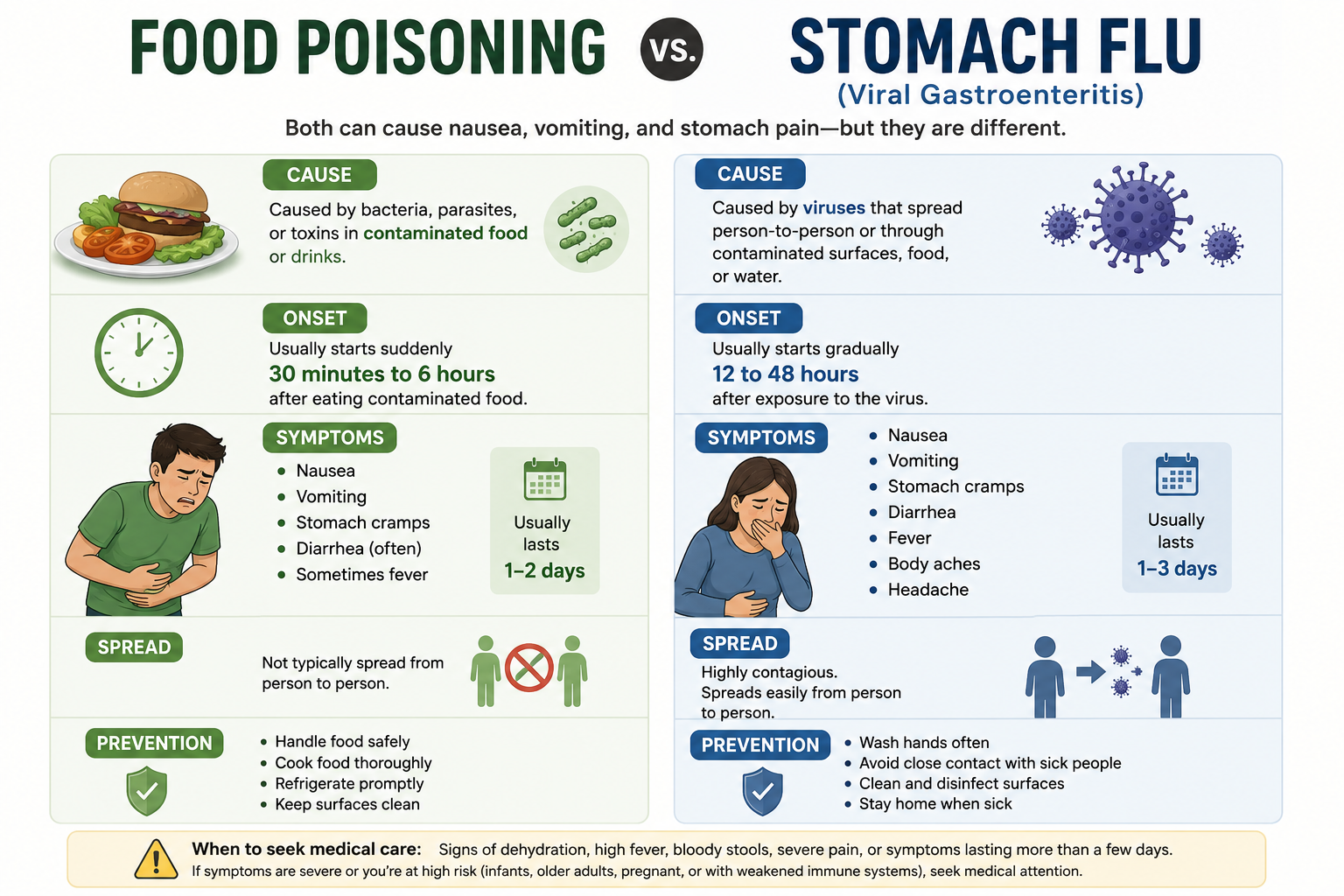
It’s 2 a.m., and you wake up in a cold sweat. Your stomach is churning, nausea is overwhelming, and you’re rushing to the bathroom. As you sit there, one question haunts you: Is this food poisoning or the stomach flu?
You’re not alone in this confusion. These two conditions are often mistaken for one another because they share so many unpleasant symptoms . Both can leave you miserable with vomiting, diarrhea, and abdominal cramps. However, understanding the key differences between food poisoning and the stomach flu—medically known as viral gastroenteritis—can help you manage your symptoms more effectively, know when to seek medical care, and take steps to prevent spreading illness to others .
In this comprehensive guide, we’ll break down everything you need to know about food poisoning vs. stomach flu. We’ll explore how to determine which one you might have based on symptom onset, duration, and other telltale signs. By the end, you’ll be equipped with expert-backed knowledge to navigate these unpleasant but common illnesses with confidence.
What Is Food Poisoning vs. Stomach Flu?
Before we dive into the differences, it’s important to understand what each condition actually is.
What Is the Stomach Flu?
Despite its name, the stomach flu isn’t related to influenza at all. The flu is a respiratory infection caused by the influenza virus, while the stomach flu—more accurately called viral gastroenteritis—affects your digestive system .
Viral gastroenteritis is an inflammation of your stomach and intestines caused by a viral infection . The most common culprits include :
-
Norovirus: The leading cause of stomach flu in adults, responsible for 19-21 million illnesses annually in the U.S.
-
Rotavirus: More common in infants and young children
-
Adenovirus: Another viral cause affecting both children and adults
These viruses spread primarily through the fecal-oral route—unwashed hands after using the bathroom, changing diapers, or touching contaminated surfaces . They’re highly contagious and can spread rapidly in crowded settings like schools, daycare centers, and cruise ships .
What Is Food Poisoning?
Food poisoning refers to illness caused by consuming food or beverages contaminated with harmful bacteria, viruses, parasites, or toxins . There are over 250 known foodborne diseases, and they affect approximately 48 million Americans each year .
Common causes of food poisoning include :
-
Bacteria: Salmonella, E. coli, Campylobacter, and Listeria
-
Viruses: Norovirus (which can be transmitted through food)
-
Parasites: Giardia and Cyclospora
-
Toxins: Produced by bacteria like Staphylococcus aureus or Clostridium botulinum
Contamination typically occurs when food isn’t prepared, cooked, or stored properly. Cross-contamination during food preparation, eating raw or undercooked meats, and consuming unpasteurized dairy products are common culprits .
Why It Matters: The Importance of Knowing the Difference
You might wonder, “If the symptoms and treatments are similar, why does it matter which one I have?” There are several important reasons:
-
Treatment Approach: While most cases resolve with rest and hydration, food poisoning caused by bacteria may require antibiotics—which won’t help viral gastroenteritis .
-
Prevention and Spread: Stomach flu is highly contagious and can spread person-to-person, while food poisoning typically requires consuming contaminated food . Knowing which you have can help prevent outbreaks.
-
Expected Duration: Understanding how long you’ll be sick helps with planning, whether it’s taking time off work or arranging childcare .
-
When to Seek Help: Certain symptoms, like bloody diarrhea or high fever, may be more common with specific types of food poisoning and warrant medical attention .
As Jessika Hinz, DO, an infectious disease specialist at Banner Health, explains, “The terms food poisoning and stomach flu can be misleading because many things—like bacteria, viruses, toxins, or parasites—can get into our food and drink and make us sick” . Understanding the root cause is your first step toward the right recovery path.
Key Differences: Food Poisoning vs. Stomach Flu
While both conditions share overlapping symptoms, several key differences can help you determine which one is causing your distress.
Onset of Symptoms
Food poisoning is the sprinter in this race—symptoms hit fast and hard. Depending on the contaminant, you might start feeling sick within 30 minutes to a few hours after eating contaminated food . Some bacteria like Staphylococcus aureus can cause symptoms in as little as 30 minutes .
Stomach flu is more of a marathon runner. Symptoms typically take 1 to 3 days to develop after exposure to the virus . This slower onset can make it harder to pinpoint when and where you were exposed.
Duration of Illness
Food poisoning typically runs its course quickly—usually within 24 to 48 hours . While you may feel tired afterward, the acute vomiting and diarrhea typically resolve within a couple of days.
Stomach flu tends to stick around longer, often lasting 3 to 5 days, though some cases can persist up to 10 to 14 days .
Primary Symptoms
Both conditions cause similar gastrointestinal distress, but there are subtle differences:
Food poisoning is more likely to cause :
-
Severe abdominal cramping
-
Bloody diarrhea (particularly with bacterial infections like E. coli)
-
Symptoms starting with diarrhea
Stomach flu is more likely to include :
-
More prominent nausea and vomiting
-
Low-grade fever
-
Body aches and chills
-
Headaches
-
Fatigue
Transmission
Food poisoning results from consuming contaminated food or beverages. If multiple people ate the same meal and all became ill, it strongly suggests food poisoning .
Stomach flu spreads from person to person through contaminated surfaces, close contact, or sharing food and utensils with an infected person . It can also spread through airborne particles from vomit .
Seasonal Patterns
Stomach flu tends to peak during winter and spring months (October through April in the U.S.) .
Food poisoning doesn’t follow a seasonal pattern—it can occur any time of year, though warmer months may see an increase due to food spoiling faster at picnics and barbecues .
Step-by-Step Guide: How to Tell Food Poisoning vs. Stomach Flu
When you wake up feeling miserable, here’s a systematic approach to determine what’s making you sick :
1: Consider the Timeline
-
If symptoms started within 30 minutes to 6 hours after eating: Likely food poisoning, especially if you had riskier foods like undercooked meat, unpasteurized dairy, or deli meats
-
If symptoms started 12 to 48 hours after exposure: More likely stomach flu, particularly if you’ve been around others who are sick
2: Ask About Others
-
Did others who ate the same meal get sick? If yes, food poisoning is probable
-
Is there a stomach bug going around your workplace, school, or community? If yes, it’s likely viral gastroenteritis
3: Evaluate Other Symptoms
-
Bloody diarrhea is more common with food poisoning
-
Fever, chills, and body aches may be more prominent with stomach flu
-
Sudden, severe symptoms often point to food poisoning
-
Gradual onset with feeling unwell first suggests stomach flu
4: Consider Duration
-
If you’re feeling better within 24-48 hours: Likely food poisoning
-
If symptoms persist beyond 3-5 days: More likely stomach flu
Benefits of Understanding the Difference
Knowing which condition you’re dealing with offers several advantages:
-
Peace of mind: Understanding that your symptoms will likely resolve quickly (food poisoning) or follow a predictable course (stomach flu) can reduce anxiety.
-
Better communication with healthcare providers: You can provide more accurate information about your illness onset and duration, helping your doctor make appropriate recommendations.
-
Targeted prevention: If you had food poisoning, you’ll know to be more careful with food handling. If it was stomach flu, you’ll focus more on handwashing and avoiding others.
-
Protecting others: Understanding whether your illness is contagious (stomach flu) or potentially linked to contaminated food (food poisoning) helps you take appropriate precautions to prevent spreading illness .
How to Manage Symptoms at Home
Whether you have food poisoning or stomach flu, the approach to home care is remarkably similar. Dr. Hinz emphasizes that “staying hydrated is the most important thing” .
Hydration Strategy
Dehydration is the biggest concern with both conditions because you’re losing fluids through vomiting and diarrhea .
What to do:
-
Take small sips of water or clear fluids every few minutes
-
Consider oral rehydration solutions like Pedialyte or electrolyte drinks
-
Try ice chips if you can’t keep liquids down
-
Clear broths can help replace electrolytes
What to avoid:
-
Caffeine and alcohol (these worsen dehydration)
-
Sugary drinks (can make diarrhea worse)
-
Dairy products until you’re fully recovered
When to Start Eating
Give your stomach time to settle—don’t rush back to solid foods.
The BRAT diet is a common recommendation :
-
Bananas
-
Rice
-
Applesauce
-
Toast (plain)
Additional bland options :
-
Soda crackers
-
Plain cereal
-
Clear soups
Foods to avoid:
-
Greasy or spicy foods
-
Dairy-heavy dishes
-
High-sugar items
-
Fatty foods
Rest and Recovery
Your body is fighting an infection—it needs rest. “Rest as much as possible to give your body time to heal,” recommends Dr. Hinz .
Over-the-Counter Medications
Proceed with caution. Anti-diarrheal medications can sometimes worsen the infection, especially with certain types of food poisoning . Always consult a healthcare provider before taking them.
For fever or body aches, acetaminophen (Tylenol) is generally safe, but avoid ibuprofen if you’re experiencing significant dehydration .
When to Seek Medical Attention
Most cases of food poisoning and stomach flu resolve without medical intervention. However, certain red flags warrant professional care.
Signs You Need to See a Doctor
According to experts from Banner Health, Northwestern Medicine, and other reputable healthcare organizations, you should seek medical attention if you experience :
| Symptom | When to Act |
|---|---|
| Signs of severe dehydration | Dry mouth, dizziness, no urination for 8 hours, dark-colored urine, excessive thirst |
| Blood in vomit or stool | Seek immediate medical care |
| High fever | Over 102°F in adults; over 100.4°F in children may be concerning |
| Symptoms lasting > 24-48 hours | Particularly if not improving |
| Inability to keep liquids down | For 12-24 hours or longer |
| Severe abdominal pain | More than mild cramping |
| Diarrhea lasting > 3 days | Seek medical evaluation |
Special High-Risk Groups
Certain individuals are more susceptible to complications and should see a doctor promptly :
-
Young children and infants: Monitor for fewer wet diapers, tearless crying, or sunken eyes
-
Older adults: Higher risk of dehydration
-
Pregnant women: Particularly with Listeria risk
-
Immunocompromised individuals: Those with diabetes, liver disease, kidney disease, HIV/AIDS, or undergoing chemotherapy
Gabriela Delgado, MD, a Northwestern Medicine primary care physician, adds, “If you or someone you know is sick from eating a certain food, contact your local health department to report the incident. This can prevent further outbreaks” .
Expert Tips for Prevention
An ounce of prevention is worth a pound of cure. Here are expert-backed strategies to reduce your risk of both food poisoning and stomach flu.
Preventing Stomach Flu
Because the stomach flu is highly contagious, focus on breaking the chain of transmission :
-
Wash hands frequently with soap and water for at least 20 seconds, especially after using the bathroom and before eating
-
Avoid close contact with people who are sick
-
Disinfect surfaces commonly touched (doorknobs, countertops) with a bleach-based cleaner when someone is sick
-
Use gloves when cleaning up vomit or fecal matter
-
Wash laundry thoroughly in hot water if contaminated with vomit or stool
-
Consider rotavirus vaccine for infants (discuss with your healthcare provider)
Preventing Food Poisoning
Food safety is the cornerstone of preventing foodborne illness :
-
Wash hands frequently before and during food preparation
-
Cook foods to safe temperatures:
-
Poultry: 165°F (74°C)
-
Ground meats: 160°F (71°C)
-
Whole cuts: 145°F (63°C)
-
Fish: 145°F (63°C)
-
-
Store food properly:
-
Refrigerate leftovers within 2 hours
-
Keep refrigerator below 40°F (4°C)
-
Defrost foods in the refrigerator, cold water, or microwave—never on the counter
-
-
Avoid cross-contamination:
-
Use separate cutting boards for raw meats
-
Keep raw meats separate from other foods
-
Wash produce thoroughly under running water, even if labeled “pre-washed”
-
-
Watch expiration dates and food recall notices
-
Avoid consuming raw or undercooked foods, especially eggs, meat, and unpasteurized dairy
-
Keep cold foods cold at picnics and outdoor events—food can spoil in under an hour in 90°F+ heat
Real-World Examples
Example 1: Food Poisoning Scenario
Sarah and three coworkers go out for a lunch buffet. They each eat a variety of foods, including sushi, deli meats, and salads. Six hours later, all four are experiencing severe stomach cramps, diarrhea, and nausea. They all ate the same food, and symptoms developed quickly.
Most likely diagnosis: Food poisoning, likely from contaminated food at the buffet.
What to do: Stay hydrated, rest, and monitor for severe symptoms. If bloody diarrhea develops, seek medical attention.
Example 2: Stomach Flu Scenario
The Johnson family attends a holiday gathering. Two days later, 5-year-old Tommy wakes up with vomiting and diarrhea. A day later, both parents start feeling nauseous with body aches and low-grade fever. They didn’t all eat the same food, and symptoms developed gradually.
Most likely diagnosis: Stomach flu (viral gastroenteritis), likely norovirus spread at the gathering.
What to do: Focus on hydration, rest, and careful handwashing to prevent spreading within the household. Disinfect surfaces regularly.
Comparison Table: Food Poisoning vs. Stomach Flu at a Glance
| Feature | Food Poisoning | Stomach Flu (Viral Gastroenteritis) |
|---|---|---|
| Primary Cause | Bacteria, viruses, parasites, or toxins in contaminated food/water | Viruses (norovirus, rotavirus, adenovirus) |
| Contagious? | Not usually (except some viral causes) | Highly contagious |
| Symptom Onset | 30 minutes to 48 hours after eating | 1 to 3 days after exposure |
| Symptom Duration | 24-48 hours (rarely longer) | 3-5 days (can last up to 14 days) |
| Bloody Diarrhea | More common, especially with bacterial causes | Less common, typically watery diarrhea |
| Fever, Chills, Body Aches | Can occur but less prominent | More common, especially with norovirus |
| Transmission | Consuming contaminated food or water | Person-to-person, contaminated surfaces, food/drink |
| Seasonal Pattern | Can occur any time | Peaks in winter and spring |
| Treatment | Hydration, rest; may need antibiotics for bacterial infections | Hydration, rest; antibiotics won’t help (viral) |
Pros and Cons: Food Poisoning vs. Stomach Flu
Food Poisoning Pros
-
Rapid recovery: Symptoms typically resolve within 24-48 hours
-
Limited contagion: Less likely to spread to others (unless viral cause)
-
Clear trigger: Usually traceable to a specific meal or food
Food Poisoning Cons
-
Severe, rapid onset: Symptoms can hit very suddenly and intensely
-
Potential for serious complications: Certain bacteria can cause kidney failure or other complications
-
Difficulty pinpointing cause: Over 250 possible sources
Stomach Flu Pros
-
Predictable course: Symptoms follow a known pattern and timeline
-
Body fights infection: Your immune system will clear the virus naturally
-
Vaccine available: For rotavirus in infants
Stomach Flu Cons
-
Longer duration: Can last 3-5 days or more
-
Highly contagious: Easy to spread to family and coworkers
-
No specific treatment: You simply have to wait it out
-
More likely to cause systemic symptoms: Fever, chills, body aches are common
FAQ Section
1. Can you have food poisoning and stomach flu at the same time?
Yes, it’s possible to have both conditions simultaneously. For example, you could contract a virus like norovirus through contaminated food (food poisoning), but that same virus can also spread to others (stomach flu). The treatment approach remains similar: rest, hydration, and monitoring symptoms .
2. Is food poisoning contagious from person to person?
In most cases, food poisoning isn’t directly contagious, but there are exceptions . If your food poisoning is caused by a virus like norovirus, you can spread it to others through close contact or poor hand hygiene. It’s best to assume you’re contagious if you have vomiting or diarrhea and take precautions .
3. How long does food poisoning last vs. stomach flu?
Food poisoning typically lasts 24 to 48 hours, though some cases can resolve in as little as 6-12 hours . Stomach flu usually lasts 3 to 5 days, but symptoms can persist for up to 14 days in some cases .
4. Can antibiotics treat food poisoning or stomach flu?
Antibiotics are effective only for bacterial infections, not viral ones. They won’t help with viral gastroenteritis (stomach flu) and may be counterproductive . Even for bacterial food poisoning, antibiotics aren’t always necessary—many cases resolve on their own. Your doctor will determine if antibiotics are appropriate based on your specific situation .
5. When should I go to the emergency room for food poisoning or stomach flu?
Go to the ER or seek immediate medical care if you experience :
-
Signs of severe dehydration (confusion, fainting, rapid breathing, no urination for 8+ hours)
-
Blood in vomit or stool
-
Fever over 104°F in adults or 102°F in children
-
Inability to keep any fluids down for 12-24 hours
-
Severe abdominal pain that’s not relieved by passing gas or having a bowel movement
6. What should I eat after food poisoning or stomach flu?
Start with clear liquids—water, broth, or electrolyte solutions—when you can keep them down. Then progress to the BRAT diet: bananas, rice, applesauce, and toast. Avoid dairy, greasy, spicy, or sugary foods until you’re fully recovered .
7. How do I prevent food poisoning and stomach flu?
For food poisoning: practice proper food handling, cooking to safe temperatures, and prompt refrigeration. For stomach flu: frequent handwashing, avoiding close contact with sick individuals, and disinfecting surfaces . Good hand hygiene is essential for preventing both .
8. Is the stomach flu the same as influenza?
No. Despite the name, stomach flu (viral gastroenteritis) is completely different from influenza, which is a respiratory illness caused by the influenza virus . The flu shot won’t prevent stomach flu, and stomach flu won’t give you respiratory symptoms. Some people with the flu may experience mild gastrointestinal symptoms, but these are not the primary features .
Future Trends and Insights
Research continues to advance our understanding of gastrointestinal infections and how to manage them effectively.
Advances in Diagnostic Testing
Rapid diagnostic tests for norovirus and other gastrointestinal pathogens are becoming more available, allowing for quicker identification of the specific cause of illness . This can help healthcare providers determine whether antibiotics or other specific treatments are needed.
Vaccine Development
While a rotavirus vaccine exists for infants (recommended as part of routine childhood immunizations), researchers continue working on a norovirus vaccine . Clinical trials are ongoing, and such a vaccine could significantly reduce the burden of both stomach flu and viral food poisoning in the future.
Improved Food Safety Technologies
Advances in food processing and safety technologies—including improved testing methods, better food handling practices, and new preservation techniques—continue to reduce the incidence of foodborne illness. However, as the CDC notes, about 48 million Americans still experience food poisoning each year , highlighting the continued importance of food safety education.
Growing Awareness of Long-Term Complications
Researchers are increasingly recognizing that severe food poisoning from certain bacteria (like E. coli or Salmonella) can have long-term health effects, including arthritis, kidney problems, and nerve damage . This emphasizes the importance of prompt treatment and follow-up care in severe cases.
Telemedicine for Gastrointestinal Illnesses
The rise of telehealth has made it easier for people with gastrointestinal symptoms to consult healthcare providers without spreading illness to others in a waiting room. Virtual visits can be particularly valuable for food poisoning and stomach flu, allowing providers to assess symptoms and recommend care .
Conclusion: Knowing the Difference Brings Peace of Mind
Food poisoning and stomach flu are two distinct conditions that share many symptoms but have important differences in cause, onset, duration, and transmission. While both can make you miserable, understanding these differences helps you manage your illness more effectively, know when to seek medical care, and prevent spreading illness to others.
Remember the key takeaways:
-
Onset is a major clue: Food poisoning hits fast (hours), while stomach flu takes its time (1-3 days)
-
Duration differs: Food poisoning is typically over within 24-48 hours; stomach flu may linger for 3-5 days or more
-
Treatment is similar: For both, prioritize hydration and rest
-
Know when to seek help: Watch for severe dehydration, bloody stool, high fever, or symptoms lasting more than 48 hours
Ultimately, as infectious disease specialist Dr. Hinz emphasizes, the most important thing you can do is listen to your body, stay hydrated, and seek medical care if you’re concerned .
Key Takeaways
✅ Food poisoning is caused by consuming contaminated food or beverages .
✅ Stomach flu (viral gastroenteritis) is a viral infection of the digestive tract .
✅ Onset time differs: food poisoning (30 min to 48 hours) vs. stomach flu (1-3 days) .
✅ Duration varies: food poisoning (24-48 hours) vs. stomach flu (3-5 days, up to 14 days) .
✅ Bloody diarrhea is more common with food poisoning, while fever and body aches are more common with stomach flu .
✅ Treatment for both focuses on hydration and rest—antibiotics aren’t helpful for viral causes .
✅ Prevention through handwashing and proper food handling protects against both conditions .
✅ Seek medical care for severe dehydration, bloody stool, high fever, or symptoms lasting more than 48 hours .
✅ High-risk individuals (children, elderly, pregnant women, immunocompromised) need prompt medical attention .
Call to Action
Have you experienced food poisoning or stomach flu? What helped you recover? Share your experience in the comments below—your story might help someone else recognize their own symptoms!
If you’re currently experiencing concerning symptoms, don’t wait. Contact your healthcare provider or visit urgent care. For severe symptoms like bloody stool, high fever, or signs of severe dehydration, go to the emergency room immediately.
For more information on gastrointestinal health, food safety, and managing illness, explore these trusted resources:
Sources
-
Banner Health. “Food Poisoning or Stomach Flu: How to Tell the Difference.” Banner Health, 2025.
-
Acibadem Health Point. “What Is the Difference Between Stomach Flu and Food Poisoning.” Acibadem Health Group, 2025.
-
Northwestern Medicine. “Stomach Flu, Food Poisoning or Influenza: Which One Do You Have?” NM.org, 2024.
-
Medical News Today. “Stomach Virus vs. Food Poisoning: Symptoms, Differences, and Treatment.” Medical News Today, 2018.
-
Keck Medicine of USC. “Is It the Stomach Flu or Food Poisoning?” USC Internal Medicine Blog, 2025.
-
Patient First. “Is It a Stomach Bug or Food Poisoning?” PatientFirst.com, 2025.
-
Blue Cross Blue Shield Michigan. “Food Poisoning vs. Stomach Bug: What’s the Difference?” MIBlueDaily, 2025.
-
GoodRx. “Food Poisoning vs. Stomach Flu: What’s the Difference?” GoodRx, 2022.
-
WellNow Urgent Care. “Stomach Flu or Food Poisoning: How to Spot the Difference.” WellNow.com, 2024.
-
UNC Health Talk. “Food Poisoning or Stomach Flu? How to Tell the Difference.” UNC Health, 2023.
-
WellTuned by BCBST. “What Do I Have: Food Poisoning, Stomach Flu or Food Allergy?” BCBST WellTuned, 2019.
Disclaimer: This article is for informational purposes only and does not substitute professional medical advice. Always consult with a healthcare provider about any medical concerns.
FOR FURTHER INFORMATION VISIT: THESOLOMAG.COM