
 By Admin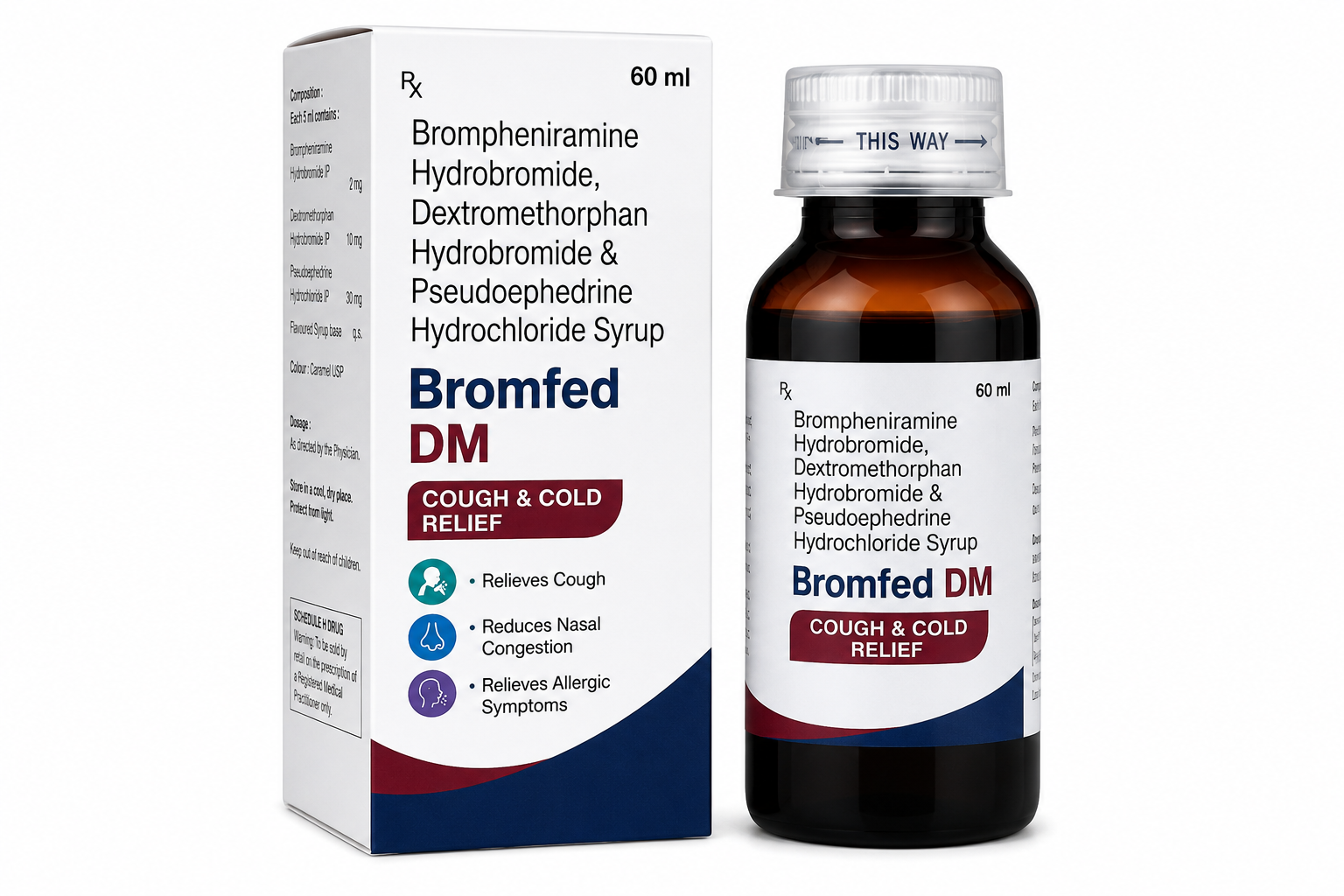
When cold and allergy season strikes, the combination of a stubborn cough, stuffy nose, and sinus pressure can make even simple tasks feel overwhelming. For many people, prescription medications like Bromfed DM offer targeted relief when over-the-counter options aren’t enough.
But what exactly is Bromfed DM? Is Bromfed DM over the counter or do you need a prescription? What is Bromfed DM used for, and how does it work? This comprehensive guide answers all these questions and more, drawing directly from the FDA-approved prescribing information and reputable medical sources.
| Ingredient | Strength per 5 mL | Drug Class | Primary Action |
|---|---|---|---|
| Brompheniramine Maleate | 2 mg | Antihistamine | Blocks histamine to reduce allergy symptoms |
| Pseudoephedrine Hydrochloride | 30 mg | Decongestant | Constricts blood vessels to relieve nasal congestion |
| Dextromethorphan Hydrobromide | 10 mg | Antitussive | Suppresses cough reflex |
Bromfed DM syrup typically appears as a pink liquid and may have either a butterscotch or melon flavor, depending on the manufacturer . Some formulations contain a small amount of alcohol (0.95% v/v) and may include sugar or be sugar-free.
What Is Bromfed DM Used For?
Bromfed DM is indicated for the relief of coughs and upper respiratory symptoms, including nasal congestion, associated with allergies or the common cold . It combines three therapeutic actions:
-
Antihistamine (Brompheniramine): Reduces sneezing, runny nose, and itchy, watery eyes by blocking histamine receptors
-
Nasal Decongestant (Pseudoephedrine): Relieves stuffy nose and sinus pressure by constricting blood vessels in the nasal passages
-
Cough Suppressant (Dextromethorphan): Reduces the urge to cough by acting on the brain’s cough center
Key Distinction: While the individual ingredients may be available over-the-counter, the combination product Bromfed DM is prescription-only. This means Bromfed DM is not available over the counter—you need a prescription from a healthcare provider.
Is Bromfed DM a Controlled Substance?
No, Bromfed DM is not a controlled substance. The Drug Enforcement Administration (DEA) has not classified this medication as a controlled substance .
However, because it contains pseudoephedrine—a precursor that can be used in the illicit manufacture of methamphetamine—the medication is available by prescription only . This regulatory measure helps prevent diversion while ensuring patients receive appropriate medical supervision.
How Bromfed DM Works
Understanding how each component works helps explain why this combination medication is effective for cold and allergy symptoms.
Brompheniramine (Antihistamine)
Brompheniramine is a first-generation antihistamine belonging to the alkylamine class. It works by competing with histamine for receptor sites on cells throughout the body . During an allergic reaction, histamine release causes symptoms like:
-
Nasal tissue vasodilation (swelling)
-
Increased vascular permeability (fluid leakage)
-
Increased mucus secretion
By blocking these effects, brompheniramine reduces runny nose, sneezing, and watery eyes. It also has anticholinergic (drying) and sedative effects, which contribute to its overall symptom relief profile.
Onset and Duration: Following oral administration, brompheniramine reaches peak plasma concentration in approximately 5 hours. The liver is the primary site of metabolic transformation, and urinary excretion is the main route of elimination.
Pseudoephedrine (Nasal Decongestant)
Dextromethorphan (Cough Suppressant)
Dextromethorphan acts centrally to elevate the threshold for coughing by affecting the cough center in the brain. Importantly, it has no analgesic (pain-relieving) or addictive properties, making it a safer option for cough suppression compared to opioid-based antitussives.
Onset and Duration: Antitussive action begins within 15 to 30 minutes after administration and is of long duration .
Bromfed DM Dosage
The correct Bromfed DM dosage depends on the patient’s age. It is crucial to follow the prescribed dosing instructions precisely.
Standard Bromfed DM Dosage Guidelines
| Age Group | Dose | Frequency |
|---|---|---|
| Adults & Children 12+ years | 10 mL (2 teaspoonfuls) | Every 4 hours |
| Children 6 to under 12 years | 5 mL (1 teaspoonful) | Every 4 hours |
| Children 2 to under 6 years | 2.5 mL (½ teaspoonful) | Every 4 hours |
| Infants 6 months to under 2 years | Dosage to be established by a physician | As directed |
| Infants under 6 months | Safety not established | Do not use |
Important: Do not exceed 6 doses in a 24-hour period.
Using an Accurate Measuring Device
Always use an accurate measuring device (such as an oral syringe or dosing cup) provided by your pharmacist to measure Bromfed DM syrup. A household teaspoon is NOT an accurate measuring device and may result in taking the wrong dose.
Who Should Not Take Bromfed DM
Bromfed DM is contraindicated (should NOT be used) in the following situations:
-
Newborns and premature infants
-
Nursing mothers (due to higher risk of antihistamine intolerance in small infants)
-
Patients with severe hypertension (very high blood pressure)
-
Patients with severe coronary artery disease (severe heart disease)
-
Patients receiving MAOI antidepressants (or within 14 days of discontinuing MAOIs)
-
Patients with a hypersensitivity (allergy) to any ingredient
-
Patients with asthma (antihistamines should not be used to treat lower respiratory tract conditions)
Cautions and Precautions
Bromfed DM should be used with caution in patients with certain medical conditions:
| Condition | Reason for Caution |
|---|---|
| Bronchial asthma | Antihistamine component may thicken bronchial secretions |
| Narrow-angle glaucoma | Brompheniramine may increase eye pressure |
| Gastrointestinal obstruction | Brompheniramine may slow GI motility |
| Urinary bladder neck obstruction | Antihistamine may worsen urine flow problems |
| Diabetes | Pseudoephedrine may increase blood sugar |
| Hypertension (mild-moderate) | Pseudoephedrine may raise blood pressure further |
| Heart disease | Sympathomimetic effects may strain the heart |
| Thyroid disease | Pseudoephedrine may exacerbate hyperthyroid effects |
Side Effects of Bromfed DM
As with any medication, Bromfed DM can cause side effects. Being aware of these helps you know what to expect and when to seek medical attention.
Most Common Bromfed DM Side Effects
The most frequently reported adverse reactions include:
-
Sedation or drowsiness (one of the most common effects)
-
Dryness of mouth, nose, and throat
-
Thickening of bronchial secretions (mucus)
-
Dizziness
Important Note: Drowsiness is a common side effect. Do not drive, operate machinery, or perform activities requiring mental alertness until you know how this medication affects you.
Other Possible Side Effects
| Body System | Potential Side Effects |
|---|---|
| Dermatologic | Urticaria (hives), drug rash, photosensitivity, itching |
| Cardiovascular | Low or high blood pressure, cardiac arrhythmias, palpitations |
| Central Nervous System | Disturbed coordination, tremor, irritability, insomnia, visual disturbances, weakness, nervousness, seizures, headache, euphoria, dysphoria |
| Genitourinary | Urinary frequency, difficult urination |
| Gastrointestinal | Epigastric discomfort, loss of appetite, nausea, vomiting, diarrhea, constipation |
| Respiratory | Chest tightness, wheezing, shortness of breath |
| Hematologic | Hemolytic anemia, low platelets, agranulocytosis (rare) |
When to Stop Taking and Call Your Doctor
Stop taking Bromfed DM and contact your healthcare provider if you experience:
-
Worsening symptoms or no improvement within 7 days
-
Fever, rash, or persistent headache
-
Nervousness or severe dizziness
-
Difficulty sleeping (insomnia)
-
Symptoms that go away and then return
For severe reactions such as difficulty breathing, swelling of the face or throat, or seizures, call 911 immediately.
Drug Interactions
Several medications and substances can interact with Bromfed DM, potentially leading to serious adverse effects. Always inform your healthcare provider and pharmacist about all medications you are taking.
Contraindicated Interactions (Do Not Use Together)
| Drug Class | Specific Drugs | Interaction Effect |
|---|---|---|
| MAO Inhibitors | Isocarboxazid, phenelzine, tranylcypromine, selegiline, rasagiline, linezolid | Risk of acute hypertensive crisis, hyperpyrexia, hypotension, death |
| Ergot Derivatives | Ergotamine, dihydroergotamine, ergonovine | Additive vasoconstriction, significantly increased blood pressure |
Serious Interactions (Use with Caution)
| Drug Class | Specific Drugs | Interaction Effect |
|---|---|---|
| CNS Depressants | Alcohol, sedatives, hypnotics, tranquilizers, antianxiety agents | Additive sedative effects |
| Tricyclic Antidepressants | Amitriptyline, imipramine, nortriptyline, doxepin | Increased effects of pseudoephedrine; may increase blood pressure and heart rate |
| Antihypertensives | Blood pressure medications | Sympathomimetic may reduce their effectiveness |
| SNRIs | Duloxetine, venlafaxine | Increased adrenergic effects |
Special Populations
Pregnancy (Category C)
Breastfeeding
Pediatric Use
Safety and effectiveness in children under 6 months of age have not been established.
Geriatric Use
Clinical studies did not include sufficient numbers of subjects aged 65 and over. However, antihistamines are more likely to cause dizziness, sedation, and hypotension in elderly patients. The elderly are also more likely to experience adverse reactions to sympathomimetics. Start at the low end of the dosing range for elderly patients.
Overdose Signs and Treatment
Signs and Symptoms of Bromfed DM Overdose
Overdose of Bromfed DM can be serious, especially in children:
| Component | Overdose Symptoms |
|---|---|
| Brompheniramine | CNS effects may vary from depression to stimulation (especially in children); anticholinergic effects |
| Pseudoephedrine | CNS stimulation, tachycardia, hypertension, cardiac arrhythmias (CNS depression may occasionally occur) |
| Dextromethorphan | Drowsiness, ataxia, nystagmus, convulsive seizures |
Warning: Especially in infants and small children, antihistamines in overdose may cause hallucinations, convulsions, and death.
Overdose Treatment
If overdose is suspected, seek emergency medical attention immediately. Treatment may include:
-
Induced emesis (if patient is alert and within 6 hours of ingestion)
-
Gastric lavage (stomach pumping)
-
Naloxone hydrochloride (may reverse CNS depression from dextromethorphan overdose)
-
CNS stimulants for depression
-
Short-acting barbiturates for seizures
-
Supportive measures including oxygen and IV fluids
Toxic Dose Reference: A 2½-year-old child survived ingestion of 21 mg/kg of dextromethorphan (showing only ataxia, drowsiness, and fever), but seizures have been reported in children following ingestion of 13–17 mg/kg. The toxic dose of pseudoephedrine is estimated to be less than 50 mg/kg.
Bromfed DM vs. OTC Cold Medications
| Feature | Bromfed DM (Prescription) | OTC Cold Medications |
|---|---|---|
| Availability | Prescription only | Over-the-counter |
| Active Ingredients | Combination (3 ingredients) in fixed strengths | Variable; may contain one or more ingredients |
| Why Prescription Only | Contains pseudoephedrine (monitored for methamphetamine production) | Generally contain lower-risk ingredients |
| Medical Supervision | Prescribed by healthcare provider | Self-directed use |
Key Takeaway: While the individual ingredients in Bromfed DM (brompheniramine, pseudoephedrine, and dextromethorphan) may be available OTC separately, the combination product requires a prescription. This ensures proper dosing and medical oversight.
Expert Tips for Safe Bromfed DM Use
Based on clinical pharmacology and prescribing information, here are expert tips for safe and effective use:
✅ Do’s
-
Take exactly as prescribed—do not exceed 6 doses in 24 hours
-
Use an accurate measuring device (oral syringe or dosing cup)
-
Store at room temperature away from light and moisture
-
Know your medical history—inform your doctor of all health conditions
-
Be aware of drowsiness effects—avoid driving until you know how it affects you
-
Stay hydrated to help counter drying effects
-
Finish the prescribed course unless directed otherwise
❌ Don’ts
-
Don’t share medication—it was prescribed specifically for you
-
Don’t take with alcohol—additive sedative effects
-
Don’t take with other cough/cold medications—risk of duplicating ingredients
-
Don’t use beyond 7 days unless directed by a doctor
-
Don’t take if pregnant or nursing without consulting your healthcare provider
-
Don’t stop abruptly if you’ve been taking long-term (though short-term use is typical)
Frequently Asked Questions (FAQ)
1. Is Bromfed DM over the counter?
No, Bromfed DM is a prescription-only medication.You cannot buy it over the counter because it contains pseudoephedrine, which the government regulates due to its use in illicit methamphetamine manufacturing.
No, Bromfed DM is not a controlled substance. The Drug Enforcement Administration (DEA) does not classify it as such. However, it is prescription-only.
3. What is Bromfed DM used for?
Bromfed DM is used to relieve coughs and upper respiratory symptoms, including nasal congestion, associated with allergies or the common cold.
4. How often can I take Bromfed DM?
5. Can I drive after taking Bromfed DM?
Use caution. Bromfed DM can cause drowsiness and dizziness. Do not drive or operate heavy machinery until you know how this medication affects you.
6. Can I drink alcohol while taking Bromfed DM?
7. What should I do if I miss a dose?
If you miss a dose, take it as soon as you remember. However, if it is almost time for your next dose, skip the missed dose and continue with your regular schedule. Do not double up doses.
Bromfed DM is Pregnancy Category C. We should use this during pregnancy only if it is clearly needed, because we have not conducted animal reproduction studies with this specific combination.
9. Can I take Bromfed DM while breastfeeding?
Healthcare providers should not prescribe Bromfed DM to nursing mothers because small infants have a higher risk of intolerance to the medication.
10. What is the Bromfed DM dosage for children?
-
2 to under 6 years: 2.5 mL every 4 hours
-
6 to under 12 years: 5 mL every 4 hours
-
12 years and older: 10 mL every 4 hours
-
Under 6 months: Safety not established
Future Trends
Ongoing Research and Developments
-
Prescription vs. OTC Balance: Regulatory agencies continue to monitor pseudoephedrine-containing products to balance patient access with drug diversion prevention. The prescription status of combination products like it reflects this ongoing consideration.
-
Pediatric Safety Research: With evolving understanding of medication effects in children, particularly regarding antihistamines and their sedative effects, continued research may refine pediatric dosing recommendations.
-
Alternative Formulations: Some pharmaceutical companies are developing alternative delivery systems for combination cough/cold medications to improve patient adherence and reduce side effects.
-
-
Decreased Alcohol Content: Some manufacturers are reformulating to reduce or eliminate alcohol content in liquid preparations, addressing concerns from certain patient populations.
Conclusion
It is a prescription combination medication that effectively relieves cough and upper respiratory symptoms associated with allergies or the common cold. Its three active ingredients—brompheniramine (antihistamine), pseudoephedrine (nasal decongestant), and dextromethorphan (cough suppressant)—work together to provide multi-symptom relief when OTC options aren’t enough.
Key questions answered in this guide:
-
✅ Is Bromfed DM over the counter? No, it requires a prescription
-
✅ Is Bromfed DM syrup a controlled substance? No, but it is prescription-only due to pseudoephedrine content
-
✅ What is Bromfed DM used for? Relief of cough, nasal congestion, and upper respiratory symptoms
-
✅ What is Bromfed DM syrup used for? Same indications—cough and cold/allergy symptom relief
-
✅ What is the Bromfed DM dosage? Depends on age; always follow your healthcare provider’s instructions
Safety First: Drowsiness is a common side effect—never drive or operate machinery until you know how the medication affects you. Avoid alcohol, and do not exceed the recommended 6 doses in 24 hours. Consult your healthcare provider if symptoms persist beyond 7 days or worsen.
Key Takeaways
| Topic | Key Point |
|---|---|
| Drug Name | Bromfed DM (brompheniramine/pseudoephedrine/dextromethorphan) |
| Availability | Prescription only (not OTC) |
| Controlled Substance Status | Not a controlled substance |
| Primary Uses | Cough, nasal congestion, upper respiratory symptoms from allergies/cold |
| Active Ingredients | Brompheniramine 2 mg, Pseudoephedrine 30 mg, Dextromethorphan 10 mg per 5 mL |
| Adult Dosage | 10 mL every 4 hours (max 6 doses/24 hours) |
| Most Common Side Effects | Drowsiness, dry mouth/nose/throat, dizziness, thickened mucus |
| Key Contraindications | Newborns, nursing mothers, severe hypertension, severe heart disease, MAOI use |
| Pregnancy Category | C (use only if clearly needed) |
| Geriatric Use | Use with caution; start at low end of dosing range |
Sources and Further Reading
This article is based on evidence from the following authoritative sources:
-
DailyMed, National Library of Medicine (NIH) — It Prescribing Information. Available at: https://dailymed.nlm.nih.gov
-
Drugs.com — Bromfed DM Professional Information and Patient Guidance. Available at: https://www.drugs.com/pro/bromfed-dm.html
-
Medscape Reference — Brompheniramine/Dextromethorphan/Pseudoephedrine Dosing and Interactions. Available at: https://reference.medscape.com
-
WebMD — Brompheniramine/Pseudoephedrine/Dextromethorphan Patient Information. Available at: https://www.webmd.com
-
Healthline — Brompheniramine/Dextromethorphan/Pseudoephedrine Oral Syrup Overview. Available at: https://www.healthline.com
-
RxReasoner — BROMFED DM Syrup Monograph. Available at: https://www.rxreasoner.com
-
GoodRx — Bromfed DM: Uses, Side Effects, Dosage & Reviews. Available at: https://www.goodrx.com/bromfed-dm
Call to Action
Do you still have questions about Bromfed DM? Your healthcare provider and pharmacist are your best resources for personalized medical advice.
-
📋 Schedule an appointment with your healthcare provider to discuss whether it is right for your symptoms
-
💊 Consult your pharmacist for guidance on proper dosing, measuring, and storage
-
📱 Use the FDA MedWatch program to report any side effects: www.fda.gov/medwatch or 1-800-FDA-1088
Found this guide helpful? Share it with someone who might benefit from understanding Bromfed DM cough syrup uses, dosage, and safety information.
FOR FURTHER INFORMATION, VISIT: THESOLOMAG.COM