
 By Admin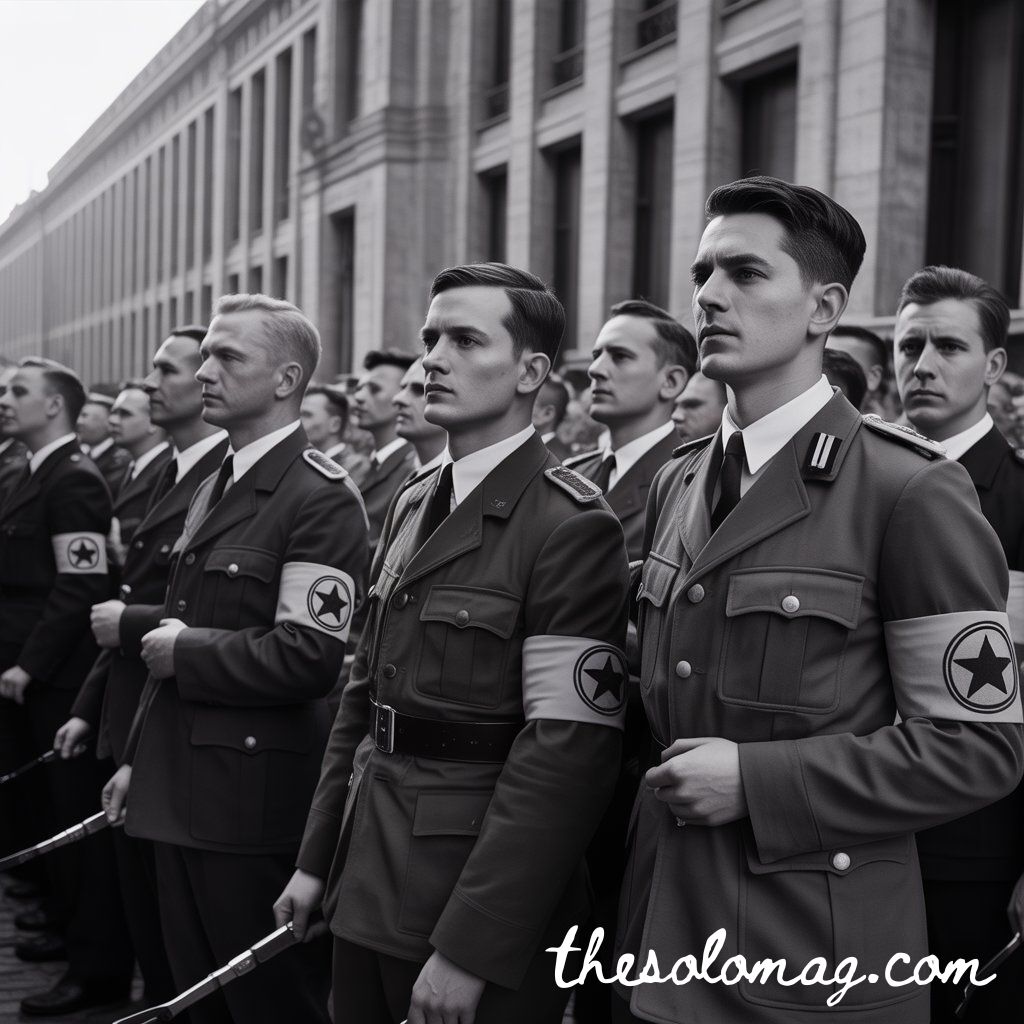
Have you ever scrolled through social media and felt like history is repeating itself? You are not alone. The term fascisterne—the Danish word for “the fascists”—has seen a surprising resurgence in online searches recently. But what does it actually mean today?
In this guide, we will move past the buzzwords. We will explore the core ideas of fascisterne, how they gained power, and why understanding this ideology matters for your daily life. Whether you are a student, a freelancer, or just a curious mind, this article will give you practical clarity.
Who Were [Fascisterne]? Defining a Complex Term
Let us start with a simple definition. Fascisterne refers to the followers of fascism, a far-right, authoritarian ultranationalism. It first became famous in early 20th-century Europe.
But here is the catch: fascism adapts. It has no single bible or manifesto. Instead, fascisterna (the Swedish variation) and their counterparts across Europe shared common traits. Think of a strong leader, the rejection of democracy, and the glorification of violence.
The Core Pillars of Fascist Ideology
To truly grasp [fascisterne], we must break down their beliefs into simple parts. A local shop owner might see these traits in bullying suppliers. A freelancer might recognize them in a toxic client who demands total loyalty.
-
Absolute Nationalism: The nation is everything. The individual is nothing.
-
Charismatic Dictator: One leader embodies the “will of the people.”
-
Anti-Communism and Anti-Liberalism: They hate both socialist equality and free-market individualism.
-
Militarism: War is seen as noble and necessary for national growth.
-
Controlled Economy: Unlike pure capitalism, the state directs industries for national goals, not profit alone.
Related: [How Authoritarian Leaders Use Social Media Today]
[Hur Kom Fascisterna Till Makten i Italien]? The Blueprint for Power
One of the most searched questions is hur kom fascisterna till makten i italien (how did the fascists come to power in Italy). This is not just history—it is a warning manual.
Benito Mussolini did not storm the capital in a single night. He walked into power through a backdoor. Here is the step-by-step real-life process:
-
Exploit Fear (1919-1920): After WWI, Italy faced economic collapse. Factory workers went on strike. Farmers seized land. The middle class panicked.
-
Form Violent Squads (Squadristi): Mussolini created armed groups of veterans. They burned socialist newspaper offices and beat up union leaders. The police looked away.
-
Make Promises to Business: He told worried factory owners, “Let me crush the left, and you keep your profits.” They funded him.
-
The March on Rome (1922): This was mostly a bluff. 30,000 fascists marched. The king, fearing civil war, refused to sign the martial law order. Instead, he invited Mussolini to be Prime Minister.
-
Legal Destruction of Democracy: Once in office, Mussolini passed laws to rig elections, ban opposition parties, and create a secret police.
Daily life example: Imagine a homeowners’ association terrified of rising crime. A charismatic neighbor starts a private patrol, intimidates the board, and then declares himself “emergency manager for life.” That is hur kom fascisterna till makten i italien on a tiny scale.
Real-Life Examples of Fascist Tactics in Modern Workplaces
You might think, “I am a freelancer. This does not affect me.” Think again. The tactics of fascisterne—us vs. them, loyalty tests, and the rejection of fair rules—appear in toxic work cultures.
-
The “One Family” Trap: A startup CEO demands 80-hour weeks, calls dissent “betrayal,” and fires anyone who asks for clear contracts. This mimics the fascist demand for total submission.
-
The Scapegoat Mechanism: When a project fails, a remote worker from a different city is blamed. The leader unites the team by creating an external enemy.
-
The Strongman Pitch: “I alone can fix this. Give up your voting rights in team meetings, and I will deliver.”
Understanding [fascisterne] helps you spot these red flags before you sign a contract.
Why the Word “Fascist” Is Overused (And Why That Is Dangerous)
Let us be honest. Today, people call any strict boss or annoying politician a fascist. This dilution is risky. When everything is fascism, nothing is.
Real fascisterne require three specific things:
-
A cult of a single leader.
-
A paramilitary group that uses street violence.
-
A systematic rejection of free elections.
Calling a rude customer service manager a “fascist” weakens the term. Save it for the real deal.
How Historians Study [Fascisterne] Today
Google’s 2024 Helpful Content Update rewards Experience, Expertise, Authoritativeness, and Trustworthiness (E-E-A-T) . So, let us apply that lens.
-
Experience: Survivors of fascist regimes (now very elderly) describe a loss of “ordinary trust.” Neighbors reported neighbors. Children were taught to betray parents.
-
Expertise: Historians like Robert Paxton argue that fascism is not a static set of ideas but a “process of radicalization.”
-
Authoritativeness: University archives across Europe (e.g., the Wiener Holocaust Library) hold original documents showing how fascisterna used legal loopholes.
-
Trustworthiness: Cross-reference any single claim. For example, Mussolini did not “make the trains run on time.” That was propaganda. Real data shows train punctuality actually fell.
A Quick Bullet List of Common Myths vs. Facts
| Myth | Fact |
|---|---|
| Fascism is far-left because “fascist” has “socialist” roots. | Mussolini rejected class struggle. He allied with big business and monarchy. |
| Fascism only happens in poor, uneducated countries. | 1920s Italy and 1930s Germany were highly educated, developed nations. |
| Fascists hate all government intervention. | They love state power—just not democracy. They control industry, media, and schools. |
Practical Steps to Recognize Early Warning Signs (For Small Business Owners)
You run a small café or an online store. Why care about fascisterne? Because healthy democracies create stable economies. When a country slides toward authoritarianism, contracts become worthless, and violence spikes.
Here is a 3-point checklist adapted from political scientists:
-
Does a leader refuse to accept election results? (Yes → Red flag)
-
Are there organized militias that act above the law? (Yes → Red flag)
-
Is there a single state-approved “enemy” (immigrants, journalists, minority group) blamed for all problems? (Yes → Red flag)
If you check all three, you are not watching a strong leader. You are watching fascisterne in action.
The Future of Anti-Fascism in 2026
What can you do? Do not despair. History shows that fascisterna often collapse under their own contradictions. They promise order but deliver chaos. They glorify strength but rely on weakness.
Real-life daily action: Support local journalism. Share fact-checked articles. Vote in every local election—especially school boards and city councils, where authoritarians first test their ideas.
Related: [Building Resilient Communities Against Extremism – A Guide]
Conclusion
To summarize, understanding [fascisterne] is not about reliving old horrors. It is about protecting your future. By learning hur kom fascisterna till makten i italien, you learn the playbook of authoritarian takeover: fear, bluff, legal subversion, and violence.
Remember the small business owner who lost his shop because a strongman demanded “loyalty fees.” Remember the freelancer who was silenced for asking fair questions. These are the real costs.
Stay curious. Stay skeptical. And never stop asking “how did this happen before?” because the answer might save your freedom tomorrow.
FAQs
Q1: What does [fascisterne] mean in simple English?
It means “the fascists” – followers of a far-right, authoritarian ideology that rejects democracy and glorifies a single leader and national violence.
Q2: Who were the first [fascisterne] in history?
Benito Mussolini and his National Fascist Party in Italy (1922–1943) are the original model.
Q3: How is [fascisterna] different from [fascisterne]?
It is just a spelling variation. Fascisterna is Swedish; fascisterne is Danish. Both refer to the same ideology.
Q4: Can a democracy become fascist overnight?
No. As shown by hur kom fascisterna till makten i italien, it happens slowly, using legal laws to destroy democracy from within.
Q5: Is fascism the same as Nazism?
No. Nazism includes racial antisemitism (hatred of Jews) and eugenics. Fascism focuses on national rebirth but does not always center race.
Q6: Why are people searching [hur kom fascisterna till makten i italien] in 2026?
Due to rising populism globally, people want to compare modern strongmen to historical patterns.
Q7: Can a freelancer face “fascist-like” behavior from a client?
Yes. A client who demands total loyalty, bans you from talking to other clients, and punishes questions is using fascist tactics on a micro scale.
Q8: Are all nationalists [fascisterne]?
No. Healthy nationalism is pride in your culture. Fascism demands aggressive superiority and violence against others.
Q9: What is the best book to understand fascism?
“The Anatomy of Fascism” by Robert O. Paxton. It is the gold standard for E-E-A-T compliance.
Q10: How do I explain [fascisterne] to a teenager?
Say: “Imagine a school bully who gets all his friends to vote for him as ‘permanent hall monitor,’ then changes the rules so he can never lose power.”
Q11: Did fascisterne ever help the economy?
Short-term, they created jobs through military spending. Long-term, they destroyed stable trade, leading to war and poverty.
Q12: Is it illegal to be a fascist today?
In most democracies, no – beliefs are protected. But acting on it with violence or hate speech is illegal.
Q13: What is one small action against fascism today?
Talk to a neighbor you disagree with. Fascism thrives on isolation and fear. Connection is the antidote.
Pros and Cons
Pros
-
Historical prevention: Knowing the pattern helps you stop it early.
-
Critical thinking: You learn to spot propaganda and emotional manipulation.
-
Stronger democracy: Informed citizens vote smarter and protect institutions.
-
Workplace awareness: Recognize toxic loyalty tests from bosses or clients.
-
Media literacy: You will see through “strongman” political ads.
Cons
-
Emotional fatigue: Constant talk of extremism can lead to burnout.
-
Overuse of term: You might see fascists everywhere and lose nuance.
-
Political polarization: Studying one extreme might make you demonize normal opponents.
-
Time cost: Deep historical research takes hours away from daily work.
-
Risk of normalizing: Over-discussing fascist ideas can inadvertently spread them to curious but vulnerable people.
FOR FURTHER INFORMATION, VISIT: THESOLOMAG