
 By Admin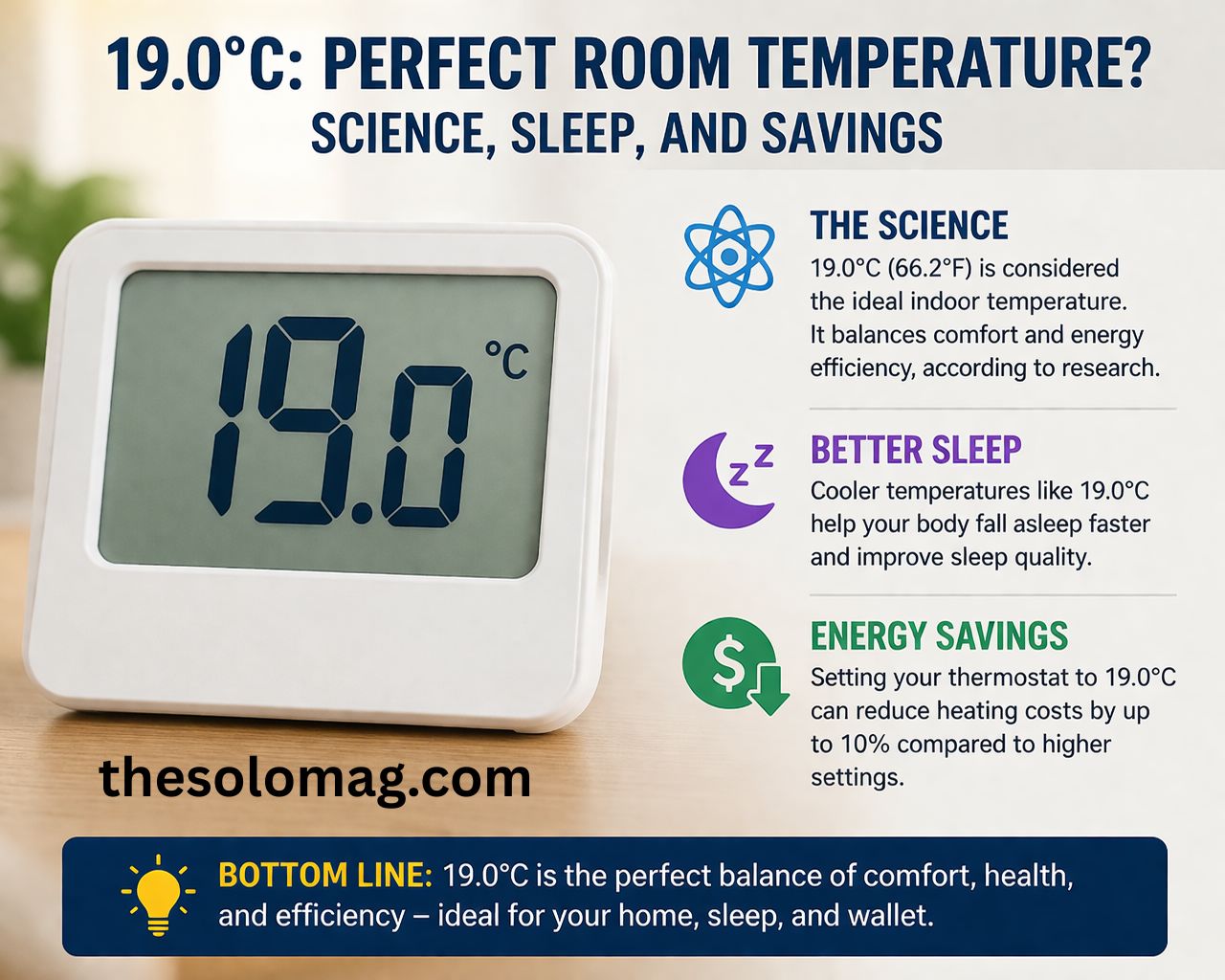
We’ve all had that argument. One person in the house is shivering under a blanket, while the other is walking around in shorts, fanning themselves. You glance at the thermostat, and it reads a specific number: 19.0 c.
In the world of home comfort and energy efficiency, few numbers carry as much weight. For years, the debate has raged about the “ideal” indoor climate. But is 19.0 degrees Celsius truly the magic number? Or is it just a myth perpetuated by energy companies trying to save a few bucks?
Whether you are a freelancer working from a home office, a parent trying to manage utility bills, or simply someone who wakes up drenched in sweat or shivering in the night, understanding the science behind 19.0 c can change your life. Let’s dig into the thermostat settings that actually work for your health, your wallet, and your sanity.
Why 19.0 c Is More Than Just a Number
When we talk about 19.0 c, we aren’t just discussing a temperature; we are discussing a threshold. In many countries, particularly in Europe and parts of North America, health organizations and energy agencies have landed on this specific figure as the gold standard for indoor heating.
But why? It turns out that 19.0 c sits at a fascinating intersection of human physiology and physics. It is cool enough to keep your body from overheating during periods of rest or light activity, yet warm enough to prevent the health risks associated with cold stress.
The Biological Sweet Spot
Humans are endothermic, meaning we generate our own heat. When the ambient temperature drops below 18°C, our bodies begin to work harder to maintain a core temperature of 37°C. When it rises above 21°C, we start to waste energy through sweating. 19.0 c is generally the point where the body achieves a state of thermal neutrality—meaning you aren’t burning extra calories to stay warm, nor are you sweating to cool down.
The Science of Sleep: Hitting the Right Temperature
If you’ve ever tossed and turned at night, struggling to fall asleep, your thermostat might be the culprit. Sleep science has evolved dramatically over the last few years, and the consensus among somnologists is clear: a cool room is essential for restorative sleep.
Your body’s core temperature naturally drops as part of your circadian rhythm. This drop signals to your brain that it’s time to sleep. If your bedroom is too hot, you inhibit this natural cooling process.
-
Too Hot (Above 22°c): Increases restlessness, suppresses REM sleep, and can lead to dehydration.
-
Just Right (19.0 c): Facilitates the natural drop in core body temperature, leading to deeper, more restorative sleep.
-
Too Cold (Below 16°c): May cause shivering and discomfort, making it hard to fall asleep.
For a freelancer working late hours or a parent who needs to be sharp in the morning, setting the thermostat to 19.0 c in the bedroom isn’t about being cheap; it’s about performance.
Real-Life Application: The Home Office Dilemma
Let’s look at a real-world example. Sarah is a freelance graphic designer who works from her converted attic. In the winter, she used to crank the heat to 22°C because she felt chilly sitting still at her desk. She noticed two things happening: her hands got clammy, and her electricity bill skyrocketed.
When she switched to maintaining 19.0 c and invested in a simple pair of wool socks and a heated vest, her productivity actually increased. Here’s why:
-
Focus: Cooler temperatures prevent the lethargy associated with stuffy, overheated rooms.
-
Cost: By lowering the temperature by just 2 degrees, she saved roughly 15% on her heating bill.
-
Health: The cooler air reduced the dust mite population, alleviating her seasonal allergies.
Related: How to Set Up an Ergonomic Home Office on a Budget
Energy Efficiency and the Environment
In an era of rising energy costs and climate consciousness, setting your thermostat to 19.0 c is one of the simplest ways to reduce your carbon footprint. According to energy agencies like the U.S. Department of Energy, you can save as much as 10% a year on heating and cooling by simply turning your thermostat back 7°-10°F for 8 hours a day.
When you maintain a consistent 19.0 c:
-
Your HVAC system runs less frequently, extending its lifespan.
-
You reduce the strain on the electrical grid during peak winter months.
-
You lower your household carbon emissions.
It’s a small adjustment that yields a massive impact over the course of a year.
How to Maintain 19.0 c (Without Freezing)
Maintaining 19.0 c in a drafty older home can feel challenging. You might set the thermostat to that number but still feel cold due to drafts, poor insulation, or humidity levels. Here is how to ensure that 19.0 c actually feels comfortable:
-
Layer Up: Instead of wearing a t-shirt in the winter, wear a base layer. This traps heat close to the skin, allowing you to feel comfortable at lower ambient temperatures.
-
Use Smart Thermostats: Modern smart thermostats learn your schedule. They can keep the house at it while you are awake and drop it to 16°c while you sleep or are away.
-
Humidity Control: Humidity plays a massive role in thermal comfort. Air at 19.0 c with 40% humidity feels much warmer than air at 19°c with 20% humidity. Using a humidifier in winter can make the temperature feel 2-3 degrees warmer without turning up the heat.
Debunking Myths: Is 19.0 c Too Cold for Children or the Elderly?
One common concern is that 19.0 c is unsafe for vulnerable populations like infants or the elderly. However, the NHS (National Health Service) in the UK explicitly recommends a room temperature of 16°c to 20°c for a sleeping baby. Overheating is a major risk factor for Sudden Infant Death Syndrome (SIDS). Therefore, 19.0 c is actually a safe and recommended temperature.
For the elderly, who may have reduced circulation and a lower basal metabolic rate, 19.0 c might feel chilly. In these cases, it’s better to maintain a higher ambient temperature (20-21°c) or use localized heating like electric blankets and warm clothing to ensure the individual stays safe without overheating the entire house.
Smart Home Integration in 2026
As we move further into 2026, the way we interact with temperature has changed. We no longer just set a temperature; we optimize for zones and usage.
Modern HVAC systems now allow for zoned heating. You can set your bedroom to 19.0 c for optimal sleep, your living room to 20°c for evening relaxation, and keep the guest room at 15°c to save energy. Voice assistants like Alexa and Google Home can now adjust the temperature based on occupancy sensors, ensuring that 19.0 c is maintained precisely where you are, and energy is saved where you aren’t.
The Economic Perspective
For small business owners operating out of a physical office or warehouse, every degree matters. Maintaining a standard of 19.0 c in commercial spaces is often cited as the balance between employee comfort and operational costs. A single degree increase can add hundreds to monthly utility bills.
Conclusion: Finding Your Personal Comfort Zone
So, is it the universal perfect temperature? Not exactly, but it is the best starting point. It represents a scientific consensus on efficiency, health, and comfort.
The goal isn’t to suffer through a cold house, but to align your environment with your body’s natural rhythms. By using it as your baseline—adding humidity when dry, layering clothing, and using smart zoning—you can achieve a level of comfort that is both sustainable and restorative.
Stop fighting with your thermostat. Start working with your biology. Set it to 19.0 c tonight, and see if you don’t wake up feeling better tomorrow.
Frequently Asked Questions (FAQs)
Q:1 Is 19.0 c too cold for a house?
No, it is generally considered a comfortable and energy-efficient temperature for a house during waking hours. It is within the recommended range provided by health organizations like the WHO for indoor temperatures in winter.
Q:2 Is 19.0 c too cold for a baby’s room?
No, it is actually considered ideal. Overheating is a greater risk for babies than being too cold. A temperature of 16°c to 20°c is recommended for infant sleep safety.
Q:3 What is 19.0 c in Fahrenheit?
19.0 degrees Celsius is equal to 66.2 degrees Fahrenheit. It is often rounded down to 66°F in common thermostat settings.
Q:4 Can I sleep in a room that is 19.0 c?
Yes, this is widely considered the optimal temperature for sleep. It helps facilitate the body’s natural core temperature drop, leading to deeper REM cycles.
Q:5 Why does 19.0 c feel cold in my house?
If 19.0 c feels cold, it is likely due to low humidity or drafts. Dry air evaporates moisture from your skin faster, making you feel cooler. Adding a humidifier or sealing drafts can make the temperature feel significantly warmer.
Q:6 Does 19.0 c save money on energy bills?
Yes. For every degree you lower your thermostat during the heating season, you can save approximately 1-3% on your energy bill. Maintaining this instead of 22°c can result in substantial savings over a winter.
Q:7 What should I wear if my house is at this?
Layering is key. A long-sleeved shirt, a light sweater, and socks are usually sufficient. Wool or thermal base layers can provide extra warmth without restricting movement.
Q:8 Is 19.0 c suitable for pets?
For most dogs and cats with fur, 19.0 c is perfectly comfortable. However, short-haired breeds, elderly pets, or puppies may benefit from a warm bed or blanket to ensure they don’t get too cold.
Q:9 How does humidity affect this?
Humidity drastically affects thermal perception. At 19.0 c, if humidity is below 30%, it feels cool and dry. If humidity is around 50%, it feels mild and comfortable. If humidity is above 70%, 19.0 c can feel damp and chilly.
Q:10 What is the difference between 19.0 c and 20.0 c?
While it is only a 1-degree difference, the energy required to maintain that extra degree can be significant. In terms of feel, 20.0 c is generally considered “room temperature” and feels slightly warmer, often requiring less clothing.
Q:11 Should I keep my thermostat at this when I am on vacation?
Yes, but you can usually set it lower (around 10-12°c) to prevent pipes from freezing while saving maximum energy. However, if you have plants or pets staying behind, 19.0 c might be necessary.
Q:12 How do smart thermostats help maintain 19.0 c?
Smart thermostats learn your schedule. They can automatically set the temperature to 19.0 c when you are home, and lower it when you leave. They also provide data on how long it takes to reach that temperature, optimizing energy usage.
Q:13 Is 19.0 c considered room temperature?
In scientific contexts, “room temperature” is often defined between 20°c to 23°c (68-73°F). However, in the context of winter heating and energy conservation, 19.0 c has become the de facto standard for “heated room temperature.”
FOR FURTHER INFORMATION, VISIT: THSOLOMAG