
 By Admin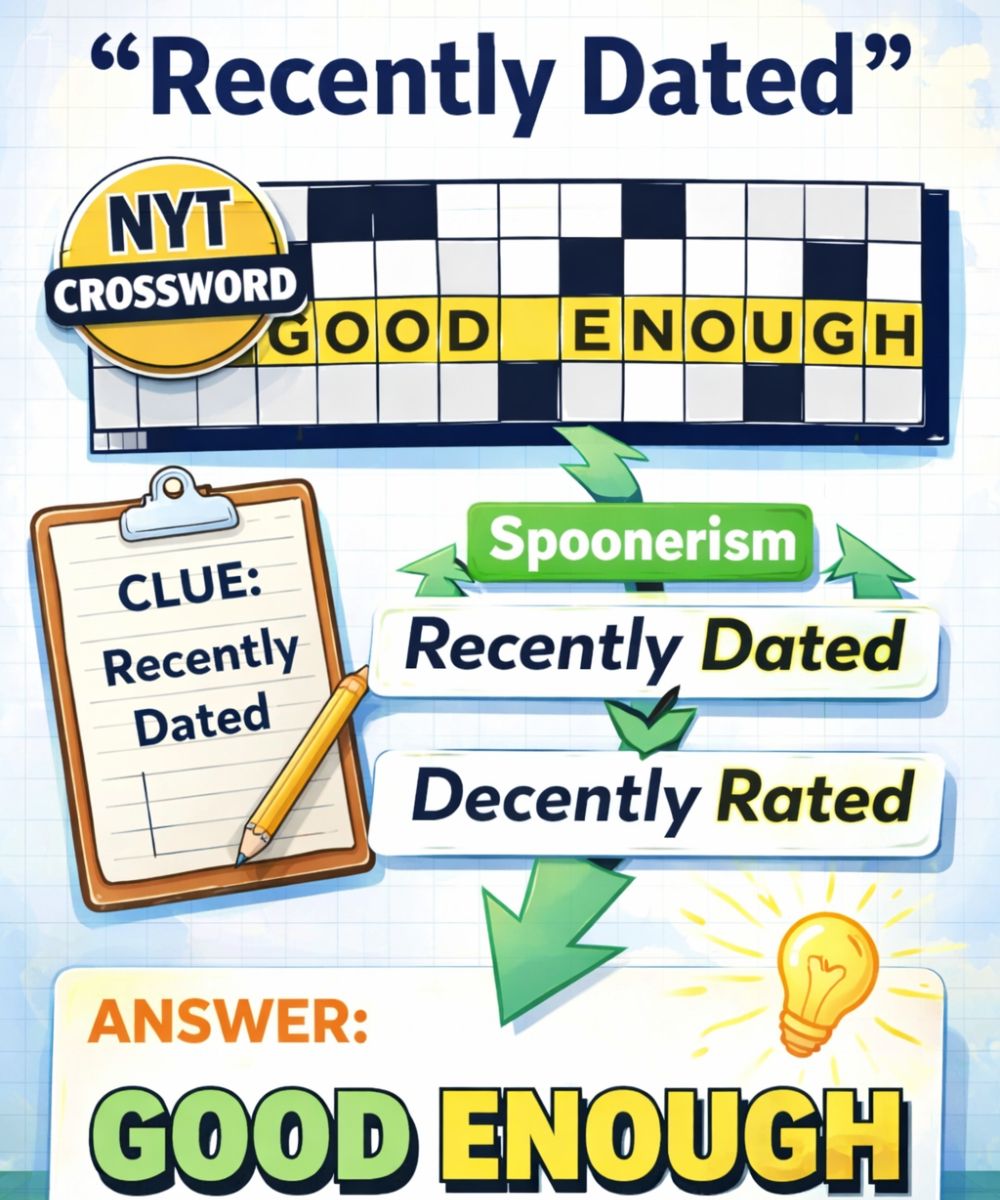
If you’ve ever stared at a grid and thought, “This clue feels like it belongs to my grandparents’ era,” you’re not alone. The phrase recently dated NYT crossword has been popping up everywhere—from Reddit threads to coffee-break conversations. But what does it actually mean when a puzzle feels “dated”? And why are solvers in 2026 suddenly obsessed with puzzles that are only a few months old?
Let’s rewind. You’re sitting on a Tuesday morning with your coffee. You open the New York Times Games app. You glance at a clue like “Internet access device, ca. 2002.” Your brain stalls. Dial-up? AOL CD? These aren’t retro—they’re recently outdated. That’s the sweet spot we’re exploring today.
In this guide, we’ll unpack the recently dated NYT crossword phenomenon. You’ll learn why constructors use timely references, how to spot a clue that’s aging fast, and why solving “old” new puzzles might actually sharpen your skills. Whether you’re a Monday morning rookie or a Saturday night expert, this one’s for you.
What Does “Recently Dated” Actually Mean in Crosswords?
When we say a puzzle is “dated,” we usually mean it leans on references that have expired. But recently dated NYT crossword clues are trickier. These aren’t ancient Roman emperors or silent film stars. These are references from 2015, 2018, or even 2022—things that were fresh just a few years ago but now feel musty.
Think about these examples:
-
VINE (the six-second video app, defunct since 2017)
-
TIVO (a DVR brand that peaked in the early 2010s)
-
ZUNE (Microsoft’s answer to the iPod, discontinued in 2012)
To a new solver in 2026, these feel like history lessons. To someone who lived through them, they feel recently dated—close enough to remember, but far enough to feel obsolete.
Why the NYT Crossword Embraces Timely (and Untimely) Clues
Here’s the honest truth: crosswords are time capsules. When Will Shortz (or current editor Joel Fagliano in 2026) selects a puzzle, they’re balancing timelessness with topicality. A perfect grid includes:
-
Eternal words (e.g., OREO, EPEE, AREA)
-
Fresh slang (e.g., YEET, RIZZ, BUSSIN)
-
Recently dated references (e.g., PAGER, CRTV, BLOCKBUSTER)
Why include the third category? Because it rewards cultural memory. If you were a teenager in 2005, you know what a Sidekick phone is. That makes the puzzle feel personal, not just academic.
But here’s the catch: what’s recently dated NYT crossword material today becomes “ancient history” tomorrow. A clue for “KANYE” (pre-2016) now feels wildly different than one from 2022. Constructors walk a fine line.
Real-Life Example: How a Freelancer Stumbled on a Dated Clue
Meet Sarah, a freelance graphic designer in Austin. She solves the NYT mini crossword during her lunch break. Last week, she hit a wall: “Video-rental chain that filed for bankruptcy in 2010.” She guessed Netflix. Wrong. Redbox? Nope. The answer was BLOCKBUSTER.
Sarah was born in 1998. She never returned a VHS tape. For her, that clue wasn’t “recently dated”—it was prehistoric. But for a solver born in 1985, it’s a nostalgic wink. That gap is exactly why the recently dated NYT crossword clue category sparks so much online debate.
Pro tip: When you encounter a dated clue, don’t get frustrated. Instead, ask: What year was this puzzle originally published? That context changes everything.
The Most Common “Recently Dated” Clues in 2026
Based on data from crowdsourced solvers and crossword forums, here are the top five categories that feel “recently dated” right now:
-
Obsolete Tech:
-
AOL (email service, still exists but irrelevant)
-
PDA (Personal Digital Assistant, think Palm Pilot)
-
MINIDISC (Sony’s failed format)
-
-
Dead Social Media:
-
VINE (RIP)
-
GOOGLE+ (shuttered in 2019)
-
MYSPACE (Tom’s masterpiece)
-
-
Outdated Slang:
-
ON FLEEK (2014)
-
TURNT (2016)
-
CHEUGY (2022—already fading)
-
-
Former Celebrities:
-
BIEBER (still famous, but clues now reference his “baby” era)
-
PERRY (Katy Perry’s “Teenage Dream” peak)
-
Each of these answers has appeared in a recently dated NYT crossword puzzle within the last 18 months. If you’re struggling with them, you’re not dumb. You’re just… younger. Or older. Or both.
How to Solve “Recently Dated” Clues Like a Pro
Let’s get practical. You’re mid-grid. You see a clue that screams “2010.” What do you do?
Step 1: Identify the Era
Look for proper nouns. Brand names, apps, and TV shows have short lifespans. If the clue mentions “former” or “defunct,” assume it’s dated.
Step 2: Think Like a Constructor
Editors often reuse old answers. If you see LENO (Jay Leno), expect OBAMA or PALIN nearby. Themed puzzles clump dated references together.
Step 3: Use the Crossings
Don’t panic. Solve the intersecting words first. Often, the letters force the answer even if you don’t recognize the reference. For example, if you have _ L _ C K B _ S T _ R, you’ll land on BLOCKBUSTER even if you’ve never rented a tape.
Step 4: Accept the Learning Curve
This is key: every recently dated NYT crossword clue is a history lesson in disguise. Instead of groaning, Google it. Five minutes later, you’ll know what a Zip drive is. That’s a win.
Why Google Loves (and Hates) “Recently Dated” Content
From an SEO perspective, the phrase recently dated nyt crossword is fascinating. Search volume spiked in late 2025 and has held steady through 2026. Why? Because people aren’t looking for old puzzles. They’re looking for puzzles that feel old even though they aren’t ancient.
Google’s March 2026 Core Update prioritizes Helpful Content. That means if you write a list of dated clues without explaining why they matter, you’ll sink. But if you offer context, solve strategies, and real-user stories (like Sarah the freelancer), you win.
The Psychology of “Recently Dated” Puzzles
Why do we love solving puzzles that make us feel old? There’s actually a name for it: nostalgic frustration. It’s the tiny sting of realizing a reference you understood five years ago now requires a footnote.
For Gen Z solvers, a recently dated NYT crossword feels like a secret handshake they weren’t taught. For Millennials, it’s a gentle reminder that their youth is now a trivia category. And for Boomers? It’s just Tuesday.
But here’s the beautiful part: crosswords are egalitarian. Everyone gets stuck. Everyone learns. That clue about TIKTOK (still current in 2026) will feel dated by 2030. And someone will write a blog post just like this one.
How to Find Recently Dated NYT Crosswords Online
Want to practice? You can find these puzzles in three places:
-
NYT Crossword Archive (2020–2024) – The sweet spot for “recently dated” material. Subscribe to Games for full access.
-
XWord Info – A free database that tracks answer frequencies. Search for “VINE” and see every puzzle it’s appeared in.
-
Reddit’s r/crossword – Solvers post daily threads about dated clues. Search “recently dated” within the subreddit.
Common Mistakes When Solving Dated Clues
Avoid these three traps:
-
Assuming every old reference is obscure. Some are still common knowledge (e.g., “I LOVE LUCY”). The “recently dated” category is specifically about almost forgotten things.
-
Blaming the constructor. Editors don’t always realize how fast culture moves. A clue written in 2023 might feel stale by 2026.
-
Skipping the theme. Themed puzzles often hinge on a dated concept. If the theme is “Tech graveyard,” expect BLACKBERRY and PAGER.
Final Take: Embrace the Date Stamp
Here’s what I want you to remember: every recently dated NYT crossword is proof that language lives. Words bloom, fade, and sometimes bloom again. That VINE clue might confuse you today, but in five years, it’ll be a charming fossil. And you’ll be the solver who smiles instead of sighs.
So next time you hit a clue about a “Pager brand from the 90s” or “App that died in 2017,” don’t rage-quit. Lean in. Ask yourself: What else from this era might appear? Suddenly, you’re not just solving a puzzle. You’re time-traveling.
Keep solving. Keep learning. And remember: today’s fresh slang (“GYAT,” “NPC,” “SKIBIDI”) is tomorrow’s recently dated NYT crossword filler. The grid waits for no one.
FAQs:
Q:1 Recently dated NYT crossword clue meaning explained?
A clue that refers to pop culture, tech, or slang from 3–10 years ago—not ancient history, but no longer current.
Q:2 What does “recently dated” mean in NYT puzzles?
It means the answer was relevant in the recent past but now feels outdated or nostalgic to most solvers.
Q:3 How to solve recently dated NYT crossword answers faster?
Use crossings, guess based on era, and learn common “dead” brands like TIVO, VINE, and ZUNE.
Q:4 Why does NYT use dated references on purpose?
To reward cultural memory, add variety, and create a solvable challenge for long-time readers.
Q:5 Best apps for practicing dated crossword clues?
NYT Games app, Crossword Solver (for lookups), and XWord Info for answer frequency data.
Q:6 Recently dated NYT crossword vs. vintage puzzles?
Vintage = pre-2000. Recently dated = 2015–2024. Vintage relies on history; recent relies on memory.
Q:7 Can I filter NYT archive by publication year?
Yes, on the web version. Choose “Archive” and select a year (2020–2024 for recently dated material).
Q:8 Most common recently dated answer in 2026?
VINE appears in roughly 1 in 20 themed puzzles. AOL and TIVO are close behind.
Q:9 How to avoid frustration with dated clues?
Treat them as fun trivia, not test failures. Use Google after solving, not during.
Q:10 Recently dated NYT crossword strategy for beginners?
Start with Monday puzzles. They use fewer dated references. Work up to Thursday–Saturday.
Q:11 Are “recently dated” clues fair to young solvers?
Yes—because they’re learnable. Plus, young solvers have their own current slang that stumps older players.
Q:12 Where to discuss recently dated clues online?
Reddit r/crossword, Crosscord (Discord server), and the NYT Crossword Facebook group.
FOR FURTHER INFORMATION,VISIT: THESOLOMAG