
 By Admin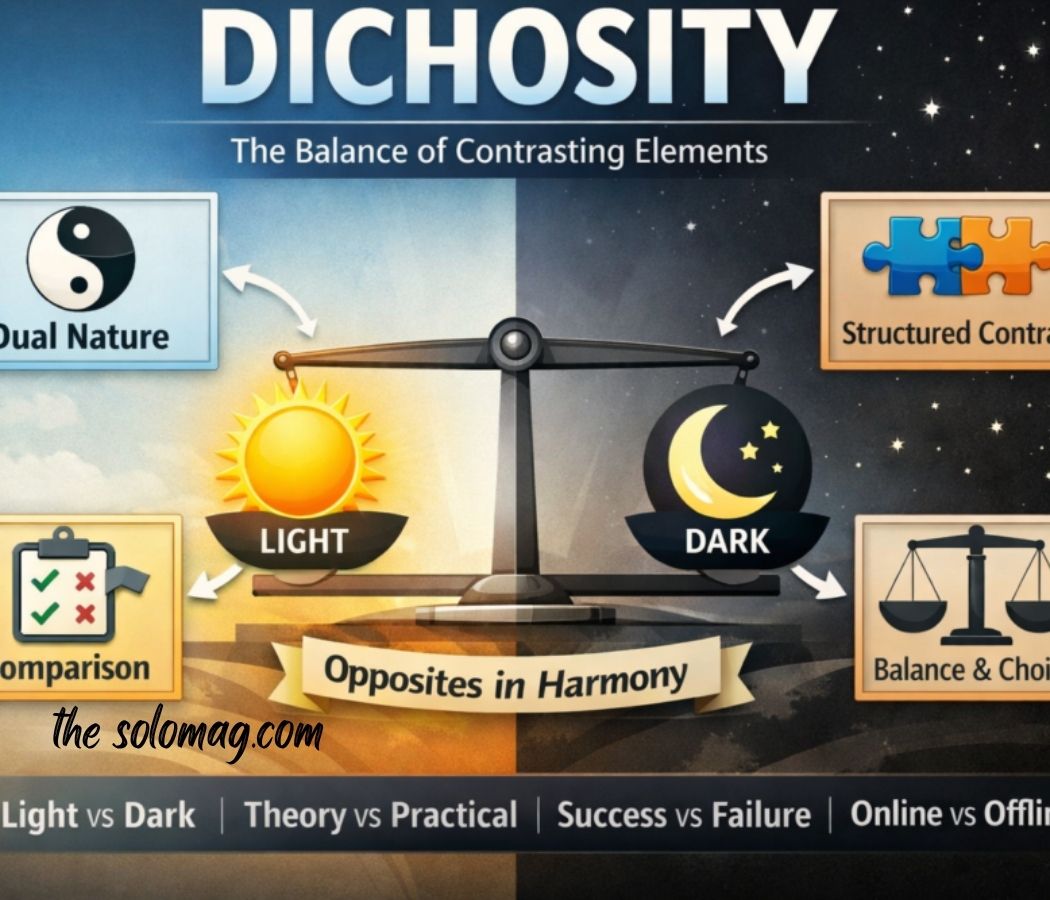
Dichosity enters your vocabulary as more than a word. It arrives as a lens. A way of seeing. A framework for understanding the world in its full, messy, magnificent complexity.
You encounter dichosity everywhere once you learn to recognize it. This concept lives in the tension between opposites. It thrives where contradictions coexist. Dichosity does not ask you to choose sides. Instead, it invites you to hold space for both.
What exactly is dichosity? Dichosity represents the quality or state of embracing duality. It describes the art of holding two seemingly opposing truths simultaneously without diminishing either. You practice dichosity when you acknowledge that you can feel both joy and sorrow in the same moment. You embody dichosity when you accept that strength and vulnerability make you whole, not weak. Ultimately, dichosity transforms contradiction from a problem into a source of depth.
The Philosophy Behind Dichosity
Western thought often trains you to seek clarity through binary choices. Good or bad. Right or wrong. Success or failure. Dichosity rejects this limitation. It draws wisdom from Eastern philosophy, where yin and yang symbolize complementary forces that create balance. You find it in ancient texts, modern psychology, and everyday human experience.
It does not mean indecision. Rather, it means recognizing that life rarely fits into neat categories. You make better decisions when you acknowledge complexity instead of ignoring it. Dichosity sharpens your thinking. It prevents you from oversimplifying situations that demand nuance. Leaders who understand dichosity navigate challenges with greater wisdom because they see the full picture, not just one perspective.
Dichosity in Personal Growth
Your personal development journey overflows with dichosity. You pursue ambitious goals while practicing gratitude for where you stand today. You push yourself to grow while accepting yourself completely. Dichosity allows these two impulses to coexist without conflict.
Consider how dichosity transforms your relationship with failure. You acknowledge failure as painful while recognizing it as essential for growth. Both truths hold. Neither cancels the other. This balanced perspective builds resilience. You bounce back faster because you do not waste energy denying reality or drowning in self-pity. It gives you the clarity to learn without shame.
Your emotional life also benefits from dichosity. You experience love and frustration toward the same person. You feel excitement and fear before a big opportunity. It normalizes these mixed emotions. It reassures you that complexity does not mean confusion. You navigate relationships with more grace when you stop demanding consistency and start embracing authenticity.
Dichosity in Creativity and Art
Artists and creators understand dichosity intuitively. Great art rarely delivers a single message. Instead, it holds multiple interpretations. It resonates differently with each viewer. It fuels creative expression because it mirrors the human experience.
You see it in music that blends joy and melancholy. You witness it in films that make you laugh and cry within minutes. Writers harness dichosity when they create characters who feel real precisely because they contradict themselves. Visual artists play with dichosity through contrast—light against dark, chaos against order, abstraction against representation.
When you create from a place of dichosity, you give yourself permission to explore without forcing conclusions. You let your work breathe. Trust your audience to engage with complexity. It liberates you from the pressure to simplify your vision for the sake of easy consumption.Dichosity in Fashion and Style
Fashion offers one of the most visible expressions of dichosity. You style structured blazers with flowing skirts. You pair vintage treasures with futuristic pieces. Streetwear meets luxury. Minimalism embraces maximalism. Dichosity transforms fashion from mere clothing into personal storytelling.
Your style reflects dichosity when you dress for your mood, not for a category. Some days you crave sharp lines and bold colors. Other days you want soft fabrics and neutral tones. Both expressions belong to you. Dichosity frees you from the pressure to pick an aesthetic and stick with it. You evolve. Your wardrobe evolves with you.
The fashion industry itself operates through dichosity. Heritage brands innovate while respecting tradition. Sustainable practices coexist with commercial demands. Runway trends influence street style while street style inspires runways. Dichosity drives fashion forward because it refuses stagnation.
Dichosity in Relationships
Relationships demand dichosity. You love someone completely while occasionally feeling frustrated. You give generously while protecting your boundaries. You speak your truth while listening deeply to another perspective. It makes these balancing acts possible.
Healthy relationships thrive on it because they accommodate complexity. You and your partner hold different views without threatening your connection. You experience conflict while maintaining respect. Dichosity teaches you that disagreement does not equal disconnection.
Parenting exemplifies it daily. You protect your children while letting them take risks. You guide them while allowing independence. You feel pride and worry simultaneously. It helps you hold these dual roles without guilt or confusion. You accept that good parenting involves holding both.
Dichosity in Business and Leadership
Great leaders embrace dichosity. They make decisions based on data while trusting intuition. They stay decisive while remaining open to feedback. They maintain high standards while showing compassion. It distinguishes good leaders from truly exceptional ones.
Business strategy also benefits from it You pursue aggressive growth while ensuring sustainability. You innovate boldly while managing risk carefully. You compete fiercely while collaborating strategically. It allows you to navigate these tensions without sacrificing one priority for another.
Companies that understand it build stronger cultures. They value results while caring about employee wellbeing. They hold people accountable while supporting their development. IT prevents business from becoming cold or chaotic. It creates balance.
Dichosity in Health and Wellness
Your wellness journey reflects it. You push your body during workouts while honoring its need for rest. You eat nourishing foods while enjoying treats without guilt. You pursue fitness goals while appreciating your body as it is today.
Mental health also embodies dichosity. You acknowledge difficult emotions while cultivating joy. You seek professional help while practicing self-reliance. You accept limitations while working toward growth. It supports sustainable wellbeing because it rejects all-or-nothing thinking.
Dichosity in Society and Culture
Society functions through dichosity. Progress requires honoring tradition while embracing change. Communities need shared values while celebrating diversity. Democracy balances individual freedom with collective responsibility.
You witness it in cultural conversations that resist simple answers. Complex issues demand nuanced understanding. it prepares you to engage thoughtfully rather than retreating to comfortable extremes. You contribute more meaningfully when you hold complexity with care.
How to Cultivate Dichosity
It is a practice. You strengthen it through intention and awareness. Start by noticing moments when you feel pulled between opposites. Instead of choosing one, ask yourself: what if both are true? This question opens new possibilities.
Practice listening to perspectives that differ from yours without needing to agree or disagree immediately. Hold space for understanding. it grows when you trade certainty for curiosity.
Embrace paradox in your own life. You can be confident and humble. You can feel grief and gratitude. You can change and stay true to yourself. it frees you from the exhausting work of pretending to be simpler than you are.
The Future of Dichosity
As the world grows more complex, it becomes increasingly essential. You face challenges that resist simple solutions. You navigate identities that blend multiple influences. You build communities that honor both individual expression and collective belonging.
It offers a path forward. It equips you with the mental flexibility to handle uncertainty. It gives you the emotional capacity to hold difficult truths without breaking. It empowers you to create, connect, and lead with depth.
Conclusion
It invites you into a richer way of living. It releases you from the exhausting pressure to choose sides, simplify complexity, or deny parts of yourself that feel contradictory. You gain something far more valuable when you embrace it: wholeness. You move through life with greater flexibility, deeper understanding, and authentic confidence.
The world will continue presenting you with paradoxes. Relationships will challenge you with mixed emotions. Decisions will resist easy answers. Growth will demand both acceptance and ambition. it equips you for all of it. You stop fighting tension and start leveraging it. You transform uncertainty from a weakness into wisdom.
Start small. Notice one duality in your life today. Instead of resolving it, sit with it. Let both truths exist. Feel how it expands your perspective rather than narrowing it. Practice this daily, and you will discover a version of yourself that thinks clearer, connects deeper, and lives more freely.
Embrace it. Hold both. Become whole.
FAQs:
Q:1 What is dichosity in simple terms?
It is the ability to hold two seemingly opposite ideas, emotions, or truths at the same time without conflict. It means embracing duality rather than forcing a choice between opposing forces.
Q:2 How is dichosity different from indecision?
Indecision stems from uncertainty or fear of choosing. it involves clarity—you recognize that both options hold value, and you choose to hold space for complexity rather than oversimplifying.
Q:3 Can dichosity improve my relationships?
Absolutely. it helps you accept that people can love you and frustrate you, agree with you and challenge you, all within a healthy connection. It reduces unrealistic expectations and deepens understanding.
Q:4 How do I practice dichosity daily?
Start by noticing moments when you feel pulled between opposites. Instead of picking one, ask yourself, “What if both are true?” Sit with that question. Over time, you build comfort with complexity.
Q5: Is dichosity a new concept?
The term may be emerging, but the concept draws from ancient wisdom traditions like Taoism (yin and yang), Stoic philosophy, and modern psychology. it gives a fresh name to a timeless human skill.
FOR FURTHER INFORMATION, VISIT : THESOLOMAG