
 By Admin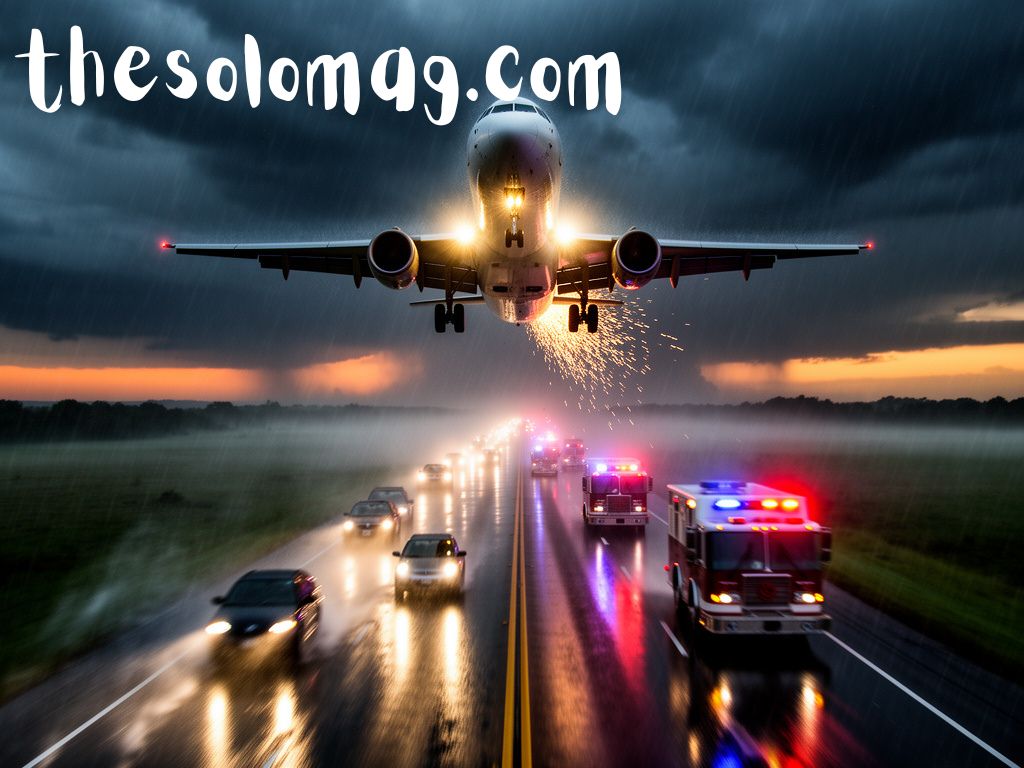
Imagine the scene: you are buckled into seat 14A, sipping a ginger ale, watching the clouds drift by. The hum of the engines is a constant, comforting white noise. Then, it changes. The pitch drops, the plane tilts subtly, and a calm but firm voice comes over the intercom: “Flight attendants, prepare the cabin for an emergency landing.”
For most of us, this is the scenario that plays out in our worst nightmares. However, in the aviation industry, pilots do not treat an emergency landing like a scene from a Hollywood disaster movie; they follow a highly practiced, methodical procedure designed to get everyone on the ground safely.
While the thought is terrifying, understanding the process, the terminology, and the reality behind these events can transform fear into empowerment. Whether you are a nervous flyer or just a curious traveler, this guide will walk you through everything you need to know about how pilots handle crises, what passengers should do, and why modern aviation remains the safest form of transportation on the planet.
What Exactly Constitutes an Emergency Landing?
In aviation terminology, not every unscheduled stop is created equal. Pilots use specific language to communicate the severity of a situation to Air Traffic Control (ATC). Understanding these distinctions is the first step in demystifying the process.
-
Pan-Pan (Possible Distress): This is the next level down from a full emergency. It indicates a serious situation that does not require immediate life-saving assistance. Think of it as a “non-life-threatening” urgent issue, such as a single engine failure on a twin-engine aircraft or a medical situation onboard.
-
Mayday (Distress): This is the big one. Derived from the French m’aider (help me), a May

-
day call indicates a grave and imminent threat to the aircraft or its occupants. This triggers a cascade of ground support, including fire trucks and ambulances rushing to the runway.
-
Forced Landing: This occurs when an aircraft is compelled to land immediately, often off-airport, due to a complete loss of power or a catastrophic failure.
-
Ditching: The most dramatic form of emergency landing; this refers to a water landing. While famously depicted in the “Miracle on the Hudson,” ditching is rare and involves highly specific survival protocols.
The Anatomy of a Crisis: How Pilots Manage the Situation
When a warning light flashes or a strange vibration shakes the airframe, the pilots do not panic. They rely on a hierarchy of priorities that every aviator knows by heart: Aviate, Navigate, Communicate.
1. Aviate (Fly the Plane)
The first priority is to maintain control. If an engine fails at 30,000 feet, the plane is still a glider. The pilot’s immediate job is to establish the “best glide speed”—the speed that maximizes distance before hitting the ground. They aren’t thinking about the airport yet; they are thinking about keeping the wings level.
2. Navigate (Find a Safe Spot)
Once the aircraft is stable, the crew identifies the best available landing site. Contrary to popular belief, pilots don’t always aim for the nearest major airport. If a runway is too short or if weather conditions are poor, they may opt for a longer runway at a military base or even a large, flat field if they are flying low.
3. Communicate (Declare the Emergency)
Only after the plane is under control does the pilot declare the emergency. This is where the “Mayday” call goes out. Ground crews immediately clear the airspace, and emergency services are dispatched.
Related: [How Airline Pilots Train for Crisis Scenarios in State-of-the-Art Simulators]
Passenger Survival: What You Need to Know
If you ever find yourself bracing for an emergency landing, your actions in the minutes leading up to touchdown are critical. Statistics from the National Transportation Safety Board (NTSB) show that even in serious accidents, the majority of passengers survive. However, survival often depends on preparation.
The “Plus Three, Minus Eight” Rule
Aviation safety experts often cite the “plus three, minus eight” rule. Statistically, 80% of aviation accidents happen within the first three minutes of takeoff or the last eight minutes of landing. This is why flight attendants ask you to stow your tray table and put your seat upright during these phases. Your vigilance during these windows is your best defense.
The 90-Second Rule
In the event of an emergency landing that requires an evacuation, the goal is to get everyone off the plane within 90 seconds. Manufacturers are required to prove that an aircraft can be fully evacuated in this time using only half the exits.
Practical Steps for Flyers
For a small business owner or freelancer who flies frequently for client meetings, the thought of an evacuation can be stressful. Here is how you can apply practical safety to your daily travel routine:
-
Count the Rows: When you sit down, count the number of rows between you and the nearest exit, both in front and behind you. In a smoke-filled cabin with no lights, you will have to navigate by touch.
-
Leave Everything Behind: In an evacuation, your laptop, your carry-on, and your “important documents” are liabilities. Trying to grab your bag slows down the evacuation, punctures slides, and creates a deadly bottleneck. Your data is insured; your life is not.
-
Wear Dense Shoes: As a frequent traveler, opt for sturdy sneakers over flip-flops or high heels. Heels can puncture evacuation slides, and flip-flops make running across hot tarmac or debris fields nearly impossible.
The Role of the Flight Crew
Flight attendants are not primarily there to serve drinks; they are there for your safety. Their training is rigorous and focuses almost entirely on crisis management.
During an emergency landing, they take on the role of “commanders” in the cabin. They perform a “silent review” in their seats before landing, mentally rehearsing the evacuation commands. They are trained to handle everything from fires to explosive decompression. If you hear them shouting “Leave everything! Come this way!”—they are not being rude; they are saving your life.
Real-Life Application: The Freelancer’s Perspective
Let’s say you are a freelance graphic designer flying from New York to Los Angeles for a critical pitch. You have your $3,000 laptop with the final presentation. You hear the pilot announce a precautionary emergency landing due to a hydraulic issue.
In this moment, the instinct is to clutch your laptop bag. However, applying the principles of safety over property is essential. The true “professional” move is to remove sharp objects from your pockets, place your laptop under the seat (not overhead, as it becomes a projectile), and mentally prepare to evacuate without it. Your reputation isn’t stored on a hard drive; it’s in your head. You can reschedule a meeting; you cannot reschedule your safety.
Common Causes Leading to an Emergency Landing
Modern aircraft are incredibly resilient, but certain mechanical and medical issues necessitate immediate diversion.
-
Engine Failure: Modern jets are designed to fly on one engine. An engine failure is rarely an immediate death sentence but often prompts a diversion as a precaution.
-
Cabin Pressure Issues: If the pressurization system fails, the plane must descend to 10,000 feet (where breathing is comfortable) immediately. If this happens over the ocean, it often requires a diversion to the nearest suitable airport.
-
Medical Emergencies: Believe it or not, medical issues are one of the most common reasons for unscheduled landings. If a passenger suffers a heart attack or stroke, the pilot will divert to get that person to a hospital, prioritizing human life over the flight schedule.
-
Smoke in the Cockpit: This is considered one of the most urgent emergencies. The source of smoke is unknown, and pilots will land at the nearest possible airport to ensure the fire risk is mitigated.
How Technology is Changing Emergency Landing Safety
By 2026, aviation technology has advanced significantly to make these scenarios safer. Autoland systems are becoming more common. In the event a pilot becomes incapacitated, modern aircraft like certain Airbus and business jets have systems that allow a passenger to press a button that will automatically guide the plane to the nearest suitable runway and land it safely via satellite navigation.
Additionally, improved composite materials used in aircraft construction (like the Boeing 787) are more resistant to fire and structural fatigue, giving passengers a larger margin of safety during a forced landing scenario.
Debunking Myths: Brace Position
One of the most misunderstood aspects of an emergency landing is the “brace position.” People often think it is designed to kill you or break your neck. In reality, the brace position (head against the seat in front, or bending forward) is designed to prevent “secondary impact.”
In a deceleration event, your body continues moving forward. If you are slumped over, you are more likely to snap your neck or suffer traumatic brain injury. The brace position shortens the arc of motion, reducing the force on your spine and head. It is a position proven to save lives, not end them.
FAQs
Q:1 Is an emergency landing dangerous?
While the term sounds terrifying, the procedure is designed to mitigate risk. During the actual landing phase, teams conduct operations with extreme caution, and emergency crews often stand by.Most emergency landings result in no injuries.
Q:2 What is the difference between a precautionary landing and a forced landing?
A precautionary landing is a planned diversion due to a developing issue (like an engine vibration), while a forced landing is an immediate, unplanned landing due to a sudden, catastrophic failure (like a complete engine flameout).
Q:3 Do passengers get compensation if a flight makes an emergency landing?
Usually, yes.If a diversion causes a significant delay or cancels your final destination, airlines often must provide accommodation, meals, and rebooking assistance, though policies vary by region (such as EC261 in Europe).
Q:4 Can a plane land safely if both engines fail?
Yes. Every commercial jet is a certified glider. If both engines fail, the plane has a specific glide ratio (usually about 17:1, meaning for every mile of altitude, it can glide 17 miles). Pilots train extensively for this scenario.
Q:5 What should I do with my glasses during an emergency landing?
Keep them on. If you need to evacuate through smoke or debris, you need to see. If you wear contacts, try to blink frequently to keep them moist, as smoke can dry them out and make them painful.
Q:6 Why do flight attendants ask me to remove high heels?
High heels can puncture the evacuation slides, rendering them useless. They also make running on uneven surfaces dangerous. Sturdy, flat shoes are the safest option.
Q:7 What does “brace for impact” actually mean?
It means assume the brace position and prepare for deceleration. It is a command that signals the landing might be harder than usual or that the aircraft might stop abruptly.
Q:8 How often do emergency landings happen?
Much more often than you think, but usually for mundane reasons like a passenger with a severe allergic reaction or a mechanical sensor giving a false reading. The vast majority are resolved without incident.
Q:9 Are pilots scared during an emergency landing?
Pilots are trained to manage fear. They focus on procedure.When they declare an emergency, they have likely already run the checklists and focused entirely on the solution, which calms the nervous system.
Q:10 Can I use my phone during an emergency landing?
During the critical phases of the approach and landing, you must follow crew instructions. Trying to film the landing is dangerous because it distracts you from listening to safety commands and creates a projectile hazard.
Q:11 What is a water landing (ditching) survival rate?
Contrary to popular belief, ditching has a very high survival rate if the aircraft is controlled. The “Miracle on the Hudson” is a prime example. However, water survival depends heavily on wearing a life vest and exiting the aircraft quickly.
Q:12 Why do windows have to be open during takeoff and landing?
It is for situational awareness. If an emergency landing occurs, having the shades up allows your eyes to adjust to the ambient light outside, making it easier to see obstacles during evacuation.
Q:13 What is the first thing to do after surviving an emergency landing?
Move away from the aircraft. Do not stop to celebrate or look back until you are a safe distance upwind of the plane. Fuel fires are the greatest post-landing risk.
Conclusion
The thought of an emergency landing will likely never be a pleasant one, but it does not have to be a source of paralyzing fear. In 2026, aviation safety is at an all-time high. Pilot and crew training, cockpit automation, and the planes’ structural integrity work together to protect you at every layer of the industry.
The next time you board a flight, take a deep breath. Count the rows to the exit. Wear sensible shoes. And remember that the “calm before the storm” silence that sometimes falls over a cabin is usually just a sign of highly trained professionals doing their jobs with precision. By understanding the process, you transform from a passive passenger into an active participant in your own safety—ready, informed, and secure in the knowledge that you know exactly what to do if the unexpected occurs.
FOR FURTHER INFORMATION, VISIT: THESOLOMAG